This Reflection paper of the ECESP Leadership Group on Network governance and circular economy hubs draws on the lessons learned when a group of ECESP Coordination Group members focused on road-mapping processes in various countries. The key to success is making the networks work, making them actionable, with a focus on network governance and the role of individual circular economy hubs.
The circular economy is a model of production and consumption that is underpinned by a transition to renewable energy and materials. It is a resilient system - good for business, people and the environment. The book titled The Circular Economy and Green Jobs in the EU and Beyond examines what the circular economy means, why the transition from a linear economy to a circular one is important, and how we can achieve it.
The book offers clarification on the meaning and the implications of the circular economy across different contexts – economic, social, cultural, legal and international. Particular emphasis is placed on the implications for jobs and different business models as well as on questions of equity.
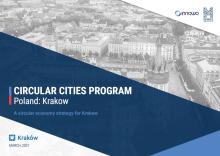
In 2017, Poland was the third most carbon–intensive economy in Europe. The five main contributing sectors are power, industry, the built environment (mainly heating), agrifood and transport.
Poland is home to 33 out of 50 cities with the highest air quality concerns in the EU, according to the WHO. The two major sources of pollutants are motor vehicles and the burning of coal in domestic solid fuel furnaces.
Recent action by Poland's cities, governments, and local communities indicate that change is sought after. The acceptance of the circular economy roadmap at the national level in 2018 and city development strategies emphasize readiness for a transition towards a circular economy. This transition could help tackle some of the country's greatest social and environmental challenges.
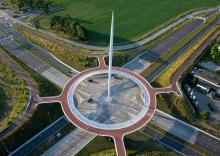
The availability of a quality infrastructure system – networks of roads, railways, bridges and waterways – is a prerequisite for all economic activity to flourish and is also paramount for people’s health, wellbeing and safety. Infrastructure is very important for human society - but its adverse environmental impact on our planet is undeniable.
To mitigate the long-term catastrophic effects of climate change and depleting material resources, a circular economy for infrastructure is crucial. The publication Circular Infrastructure: the road towards a sustainable future aims to bring this aspect into the limelight to inspire action by public actors and practitioners.
The built environment has a significant impact on a multitude of sectors, on local jobs and on quality of life. The construction sector accounts approximately for 50% of materials extracted in Europe, and is responsible for more than 35% of Europe's waste.