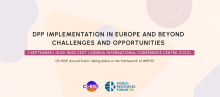
The European Commission's Directorate-General for Internal Market, Industry, Entrepreneurship and SMEs has launched four surveys for specific groups of stakeholders on the Digital Product Passport (DPP). Your feedback will help them determine the feasibility of establishing a certification scheme to ensure compliance with these requirements.
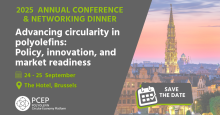
The Polyolefin Circular Economy Platform (PCEP) will host its Annual Conference on 25 September 2025 in Brussels. The event will explore how policy frameworks, technological innovation, and market dynamics are shaping the transition towards a truly circular economy for polyolefins.
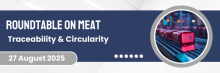
The Secretariat of the United Nations Economic Commission for Europe (UNECE) Working Party on Agricultural Quality Standards is organising a roundtable discussion with meat industry experts on traceability and circularity issues.
Circular Week is an international series of events and initiatives dedicated to the circular economy and sustainable development, taking place across Europe.
It aims to promote the concept of a closed-loop economy, support sustainable business models and foster collaboration among stakeholders.
Naturalmat is an SME that makes organic, natural mattresses, toppers and bedding, using materials that are biodegradable or recyclable.
They have initiated a number of circular projects, such as their Mattress for Life InitiativeTM which gives owners the option to have their old mattress refurbished, recycled or donated if it's still usable.
This is a yearly event tackling the regional energy transition, with an emphasis on debate and networking. This year's meeting will take place in the Mauges community and will focus on circular economy issues and cooperation with economic actors.
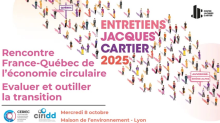
This conference will look at how to use data to drive the circular economy. More specifically, it will explore how to acquire data and how to analyse it once you've got it, with input from France and Québec.
The Cross-border Circular Economy Forum is a two-yearly event bringing together project organisers, startups, companies, and public and professional stakeholders in the French and Swiss circular economy. Come and see how the circular economy can make your business more competitive!
Why aren't we more circular? How can we be more circular? This video shows you how to get ready for the EU's Circular Economy Act and just why switching to this economic model is so important.