On 10 April 2025, the European Circular Economy Stakeholder Platform (ECESP) held a high-level stakeholder dialogue in Brussels. The purpose was twofold: it provided a forum for stakeholders to exchange views and offer feedback on ongoing legislative proposals, and it gathered valuable insights that will contribute to EU Green Week in June.
This report summarises the discussions which took place.
Adopting circular fertilisers is essential for creating a more sustainable agricultural system. By recycling organic waste, circular fertilisers can decrease the EU's dependence on imports and return valuable nutrients to the soil.
This EU Green Week partner event will discuss barriers and policy incentives for circular fertilisers.
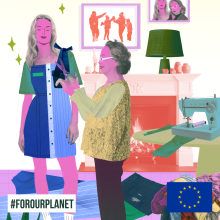
Imagine a world where nothing goes to waste and nature is thriving. It's a nice thought, isn't it? The good news is, you can help make this world a reality!
This year, the #ForOurPlanet campaign is encouraging everyone to join the circular economy! It doesn’t take much. Just stop to think before you bin it – whether it’s last season’s jumper or the old fridge making a new noise.
This year the EU Green Week 2025 will take place in Brussels on 3-5 June, focusing on circular solutions for a competitive EU. During the Stakeholder event on 5 June, several stands will be available, allowing stakeholders to showcase good practices, concrete initiatives or circular business models.
This year's World Circular Economy Forum 2025 will feature an EU Accelerator Arena, showcasing a series of sessions dedicated to innovative initiatives that foster circular value chains, trade partnerships and compliance with environmental standards.
Nine sessions hosted at the Arena in Sao Paolo’s Tivoli Hotel (and online) will highlight initiatives promoting the circular economy with EU support.
The FIBSUN and Bio-LUSH projects are organising a webinar series called FibreFuture Talks – Visions for a Sustainable Bio-based Future.
It will explore the opportunities, challenges and innovation potential of the bioeconomy across Europe, from the perspective of two collaborative and pioneering projects.
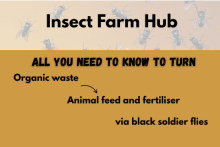
Insect farming is becoming more common, with plenty of people trying their hand at it. Like any other type of farming, however, it takes knowledge – and that is where Insect Farm Hub comes in. It aims to share knowledge about black soldier fly farming.
EKOFOM is INGENITEX's new technology for making bras and bra foam cups more sustainable. Developed as part of a project running until 2026, it produces bra cups using recycled foam of comparable quality and performance to virgin foam products.