ISO 59020 covers Circular economy — Measuring and assessing circularity performance.
It provides a structured approach for organisations to measure and assess their circularity performance. It aims to standardise the process by which organisations collect and calculate data, using mandatory and optional circularity indicators.
This standard will:
help organisations align with global sustainability goals
enhance transparency and accountability in environmental reporting
support strategic decision-making for sustainable resource management.
You can read a sample or purchase the full version on the ISO website.
Together with ISO 59004 and ISO 59010, these standards offer a complete toolkit for achieving a circular economy, from principles to measurement.
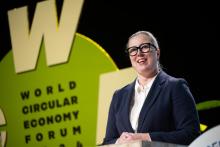
During the World Circular Economy Forum 2024, the European Commissioner for International Partnerships Jutta Urpilainen announced two initiatives intended to advance the circular economy at global level.
The establishment of the EU Circular Economy Resource Centre under the Global Gateway strategy will facilitate peer-to-peer exchanges and partnerships between EU and third-country stakeholders, fostering the uptake of sound circular economy policies and business models worldwide. The Commissioner announced a EUR 15 million commitment from the European Commission.
In addition, Commissioner Urpilainen launched the "SWITCH to Circular Economy in East and Southern Africa” programme. The European Commission will contribute EUR 40 million over five years to this programme, which will promote the transition to circular economies.
ICLEI - Local Governments for Sustainability is a global network of more than 1 750 local and regional governments committed to sustainable urban development. Active in over 100 countries, ICLEI influences sustainability policy and drives local action for low emission, nature-based, equitable, resilient and circular development.
Simon Clement joined ICLEI Europe in 2002. As Head of Circular Economy, he is responsible for ICLEI's activities in this field, including managing the European Circular Cities Declaration. For over 20 years he has worked for, and on behalf of, local, regional and national governments in project, policy and strategy development on sustainability issues such as circular economy, procurement, transport and smart cities.
This session will present the findings of innovative demonstration projects on net zero emission and plus energy neighbourhoods around Europe, as well as the viewpoints of key stakeholders along the value chain. It will also explore the policy measures needed to finance and scale up such projects around Europe.
The main outcome will be a list of policy recommendations for private and public decision makers.
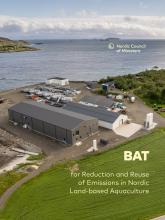
One advantage of land-based aquaculture is that emissions can theoretically be contained and reused. However, the techniques for doing so keep evolving. If the Nordic aquaculture industry is to grow in an environmentally sustainable manner, information is needed on the best available techniques.
The Nordic Council of Ministers therefore requested a report on the best available techniques for reducing and reusing emissions from land-based aquaculture. This report explores the state of play of Nordic aquaculture and takes stock of emerging and established techniques for reducing emissions and managing waste, with a focus on the circular economy. Improving waste management might improve the viability of land-based aquaculture, supporting the sustainable growth of this sector.
The European Commission has announced a EUR 40 million investment in the SWITCH to Circular Economy in East and Southern Africa (SWITCH-2-CE in ESA) programme.
This programme aims to advance circularity in Eastern and Southern African countries as they shift from a linear to a circular economy. It will do so by creating an enabling environment for investment in circular business models and improving access to the necessary skills and finance.
From 15 to 18 April, circular economy professionals from 168 countries came together at WCEF2024 to collaborate and turn ideas into action.
The Summary Report takes stock of the event: it presents the findings and key takeaways, including reports, tools and calls to action launched at the forum by partners, discussion highlights and key statistics.
Companies in the electronics sector are stepping up their efforts to move to circular business models.
This document describes Circular Transition Indicators (CTI), a metrics framework positioned to be the universal language of circular performance and accountability. CTI enables businesses to assess circularity levels, set improvement targets and monitor progress.