EFPIA, the European Federation of Pharmaceutical Industries and Associations, supports the principles of the Circular Economy Action Plan.
In the healthcare industry, circular opportunities could be centred around eco-design of products, packaging & devices, and end of life; circulation of products and materials to maximise the value of resources; reduction of reliance on single-use plastics, regeneration of natural systems by preserving finite materials and exploring renewable resources and associated services; suppliers and customer engagement for equipment return.
Safe and sustainable closed-loop recycling within the industry is the goal, but where this is not yet feasible, these valuable materials must be circulated as secondary raw materials for other sectors.
The Sustainable IT Summit took place on 23 April in the United Arab Emirates, organised by Circular Computing which, unsurprisingly, is endeavouring to promote circularity in the IT sector. The summit was attended by IT industry leaders who discussed sustainability challenges in this sector and the opportunities offered by circular processes such as remanufacturing.
The general consensus was that remanufacturing and acceptance of reused devices is inevitable: 20% of enterprise laptops bought will be pre-used in a few years.
Flexible packaging provides lightweight, efficient protection for various products. Given just how important it is to recycle packaging, FEICA has published a report taking stock of how laminating adhesives meet design-for-recycling guidelines and how sortability and recyclability testing relate to flexible plastic packaging.
Highlights:
What are laminating adhesives and why are they important for plastic packaging?
What are the challenges and criteria for recycling flexible plastic packaging?
How are laminating adhesives reflected in design-for-recyclingguidelines and what are the sortability and recyclability test methods for flexible plastic packaging?
How to enhance recyclability for adhesive applications, and future prospects.
This workshop is being held in conjunction with the EU-funded project BRINC (Brokering cross-border innovation through clusters project) and is the fifth in a series of training sessions on public procurement for public authorities.
Through examples from across Europe, it will show how and when it is most useful to work together to find successful purchasing solutions, and how that can be done.
World environmental challenges such as climate change and biodiversity loss pose considerable risks to health and well-being. Linear resource extraction and processing account for half of total greenhouse gas emissions and more than 90% of biodiversity loss and water stress. Institutional and European stakeholders agree that transitioning to a circular economy could help solve these existential crises.
With the coming change in the European political landscape, the members of the Coordination Group of the European Circular Economy Stakeholder Platform want to flag up this issue to incoming legislators and advocate keeping the Green Deal and the circular economy as a primary focus for the next Commission and European Parliament.
The new Ecodesign for Sustainable Products Regulation (ESPR), the cornerstone of the Commission’s approach to more environmentally sustainable and circular products, is set to come into force in the next few weeks.
The European Commission will therefore hold an online information session on 22 May to update stakeholders on its main provisions, outline the next implementation steps and respond to any queries.
Build UP, the European portal for energy efficiency and renewable energy in buildings, is hosting a series of six webinars organised by CircularB Action. The second webinar will focus on Policy Shapers and Regulators.
It will shed light on the policies, regulations and initiatives introduced by the OECD, the EU and local authorities to promote circularity in construction.
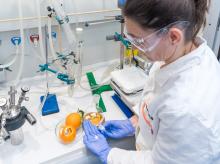
The BUILD-LIMONENE initiative is working on additives and biodegradable materials with a lower carbon footprint that can be used in the construction industry and become viable alternatives to the fossil-based materials currently available.
This new technology will contribute to the recovery of waste by using citrus peels and CO2 emissions.