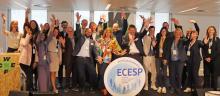
The workshops on Nutrient recycling policy will be held by the European Sustainable Phosphorus Platform in Brussels and online on 12-14 March 2024.
Objectives:
To elaborate ambitious, feasible and consensus proposals for regulatory targets for phosphorus and nitrogen reuse-recycling from municipal wastewater and
To identify policy tools to support market pull for recycled nutrients which could achieve consensus across industry and users.
The Nordic Working Group for Circular Economy is a working group under the auspices of the Nordic Council of Ministers. NCE's mandate includes contributing to activities and exchanges of information that will promote the transition to acircular economy in the Nordic Region.
NCE also wishes to influence the EU and global actors, for example by helping to identify solutions that will reduce consumption of raw materials, waste, emissions and energy by recycling products, including for new purposes.
NCE carries out projects on different topics related to the circular economy.
In 2022, the EU’s circular material use rate reached 11.5%. This means that 11.5% of material resources used in the EU came from recycled waste materials.
The 6th Plastics Recycling Technology Conference will be held in Vienna, Austria on 1 and 2 October 2024.
Responding to increasing pressure to recycle plastics and add value to reclaimed materials, the plastics industry is changing fast: this event will cover everything stakeholders need to know to stay abreast.
The conference will explore plastics recycling, advances in processes, feedstock security and all the latest technologies. It will also offer inspirational talks and discussion groups, so participants will learn about methods for improving the quality of reclaimed materials for higher-value applications and developments in recycling systems and additives for better end-of life processing.
The Circularity Gap Report Munich is the first study measuring the Circularity Gap of a city. It assesses the city’s material consumption, material cycling, consumption-based carbon footprint and other indicators. It uses a consumption-based carbon accounting approach for emissions from goods and services consumed by residents of a locality. On average, each Munich resident consumes 32 tonnes of virgin materials annually.
The study acknowledges the successes of Munich’s circular economy strategy with initiatives like investment in public transport, community gardens and remanufacturing activities, but calls for bolder action to accelerate the circular transition
ENEA is organizing the 6th annual conference of the Italian Platform of Stakeholders for the Circular Economy (ICESP) in Rome and online on 5 December 2023 (9:30-16:15 CET). It will serve as a forum for extensive discussions among various stakeholders, including institutional and entrepreneurial entities, to explore ongoing initiatives concerning the procurement of secondary sources for critical and strategic raw materials.
The one year long national Circular Design pilot programme is coming to an end! What did the companies get out of the programme? What did they achieve?
The results of the programme will be shared on 12 December in a hybrid event at 13:00 - 15:00 EET (12:00 - 14:00 CET), which is a World Circular Economy Forum side event.