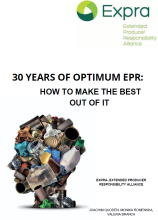
The Extended Producer Responsibility Alliance (EXPRA)was founded in 2013 to promote effective and efficient EPR systems and sustainable packaging. It has produced a study outlining the core principles and practices of EPR, which are crucial for shaping and supporting effective EPR policies across Europe and worldwide.
The HOOP project has provided Project Development Assistance to eight lighthouse cities and regions, supporting them with the development of large-scale urban circular bioeconomy initiatives focusing on making bio-based products from urban biowaste and wastewater. The partners have developed a suite of open-source tools to help cities and regions launch urban circular bioeconomy projects.
The Circular City Centre - C3 is a competence and resource centre led by the European Investment Bank and co-funded by the European Commission as part of the Circular Cities and Regions Initiative. It helps cities make circular progress and identify and prepare sound circular projects for financing.
circulareconomy.earth is a project set up by Chatham House's Environment and Society Programme. It enables users to explore the policy and trade dynamics associated with transitioning from a linear to a circular economy model, as well as providing analyses of the associated opportunities and trade-offs.
The GO-GRASS evaluation tool provides valuable insights and recommendations to help users make informed decisions about a business idea related to the processing of grass. The tool offers insights about critical factors and best practices, based on the four GO-GRASS demonstration sites and possible value chains for grassland valorisation.
The FutuRaM project aimed to extend the knowledge base on critical raw materials in Europe and to develop tools to expand the infrastructure for recovering them as secondary raw materials.
Accordingly, it developed the Urban Mine Platform, which focuses particularly on critical raw materials.
The Procurement Transformation Workshop can be set up by organisations who want to rethink their procurement processes and integrate circularity in their procurement department.
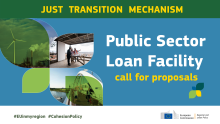
Are you looking for ways to finance circular economy projects? The European Commission has launched the multi-annual call for proposals of the Public Sector Loan Facility (PSLF) under the Just Transition Mechanism.
PSLF supports the transition towards a climate-neutral economy leaving no one behind. A wide range of sectors, among which circular economy, are eligible for funding.
A Biowaste Club is an institutionalised platform for multi-stakeholder engagement whose members are all local and regional actors along the biowaste value chain, such as waste management companies, research institutions, public authorities, etc.
Biowaste Club meetings take place twice a year, set-up and formats can vary, depending on the local needs and, consequently, on their agenda.
Using good practices and replicable examples from Europe and beyond, these EU-funded BUS-GoCircular project guidelines aim to raise awareness among practitioners and policymakers about their ability to promote a more circular construction sector and upskill professionals.