The Circulab Academy is an independent design studio and strategy consulting agency that helps organizations worldwide imagine and design regenerative solutions. It provides online courses based on powerful and open source circular design tools, created and enhanced by Circulab since 2014.
Now the Circulab Academy has a new free online course "Activate the Circular Economy".
134 people died in the devastating flooding in the German region of Ahrweiler in July 2021, caused by a climate change-induced weather situation. Over 400 000 tonnes of waste were created by the floods in one night. 40 000 households were hit, and massive damage to infrastructure such as roads, schools and hospitals was reported. The situation was described as being similar to the massive destruction following a war.
Thinking Circular’s report summarises the process of waste management and learning from this regional crisis.
Is it possible to enjoy both economic growth and environmental sustainability? This question is a matter of political debate between green growth and post-growth advocates. Considering what is at stake, a careful assessment to determine whether the scientific foundations behind this decoupling hypothesis are robust or not is needed.
This report reviews the empirical and theoretical literature to assess the validity of this hypothesis. The conclusion is both overwhelmingly clear and sobering: not only is there no empirical evidence supporting the existence of a decoupling of economic growth from environmental pressures on anywhere near the scale needed to deal with environmental breakdown, but also, and perhaps more importantly, such decoupling appears unlikely to happen in the future.
This initiative is powered by APPLiA - Home Appliance Europe, representing home appliance manufacturers from across Europe.
The Circular Appliances website takes readers through each phase of the home appliance lifecycle, from design to end-of-use. There is a straightforward description of each phase and statistics on this sector.
The Circular Culturewebsite provides a platform for all those who would like to share their practices and recommend innovative solutions for different topics, such as food waste prevention, recycling and resource efficiency. There is a collection of circular projects.
The Italian Cartiera is an ethical fashion workshop founded in Lama di Reno, Marzabotto, in 2017 which makes leather and fabric items.
Believing strongly that work is an extraordinary tool for social inclusion, Cartiera offers paths for employment and integration of disadvantaged people, mainly refugees and asylum seekers.
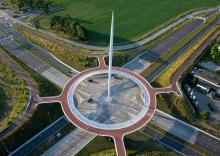
The availability of a quality infrastructure system – networks of roads, railways, bridges and waterways – is a prerequisite for all economic activity to flourish and is also paramount for people’s health, wellbeing and safety. Infrastructure is very important for human society - but its adverse environmental impact on our planet is undeniable.
To mitigate the long-term catastrophic effects of climate change and depleting material resources, a circular economy for infrastructure is crucial. The publication Circular Infrastructure: the road towards a sustainable future aims to bring this aspect into the limelight to inspire action by public actors and practitioners.
This paper by ENEA focuses on circular economy in the construction sector, by illustrating the main market dynamics related to materials for buildings and infrastructures, and active and/or potential value chain collaborations in a circular and industrial symbiosis perspective.
The paper offers an overview of:
the relevance of construction and infrastructure value chains within the EU economy,
their potential for circularity, resource efficiency and decarbonisation and