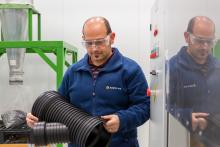
The LIFE CIRC-ELV project has developed a new process for managing end-of-life vehicles to recover bumpers and fuel tanks, recycle the materials and use them to manufacture pipes and new parts for vehicles. Using this recycled plastic in products from this industry and others will help reduce the carbon footprint by 85%.
The built environment has a huge impact on the environment. This means that it is a key lever for achieving both the goals set by the Paris Agreement and many other sustainability objectives. Activating that lever will require a long-term transformation of the entire sector.
The circular economy is a way to secure resources, limit impact and promote affordability.
Urgent global action is required to address unsustainable material resource use. This report explores the possibility of, and analyses the implications associated with, developing an international agreement on the management of natural resources.
Why an international agreement?
An international agreement could support
incentivizing action on a global level
generate awareness to tackle the issue of resource management
solve the issue of uncoordinated actions at various regional and governance levels.
The report also looks at the extent to which Free Trade Agreements (FTAs), many of them including provisions relevant to developing circular solutions, cover natural resource management and could be leveraged to enhance resource efficiency.
WaVa - Co-products Marketplace is a chemical exchange platform where professionals can sell their manufacturing co-products or buy raw materials. It matches up supply and demand.
Any industrial raw material, waste, by-product or manufacturing co-product can be traded on the WaVa platform, but its chief focus is managing and processing chemical by-products. It aims to help people achieve their circular economy objectives and thus reap the economic and environmental benefits.
WaVa is not recognised as a waste disposal facility; it simply connects buyers and sellers. It never actually takes ownership of the product.
Almost all countries in the UNECE region, covering the US, Canada, Eastern and Western Europe, the Balkans, the Caucasus and Central Asia, have adopted national policies which are directly or indirectly related to the sustainable management of natural resources and the circular economy. On 6 April 2022, UNECE launched a new CIRCULAR STEP platform for policy dialogue on the circular economy.
In the context of a three-year project on “Innovative Business Practices and Economic Models in the Textile Value Chain” (InTEX), UNEP is seeking an Implementing Partner to support its impact assessment work on sustainable economic pathways for sustainable and circular textiles. The deadline for submitting proposals is 16 May 2022.
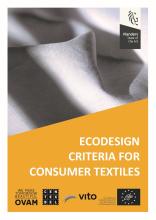
This research project lists ecodesign criteria for circular fashion and textiles.
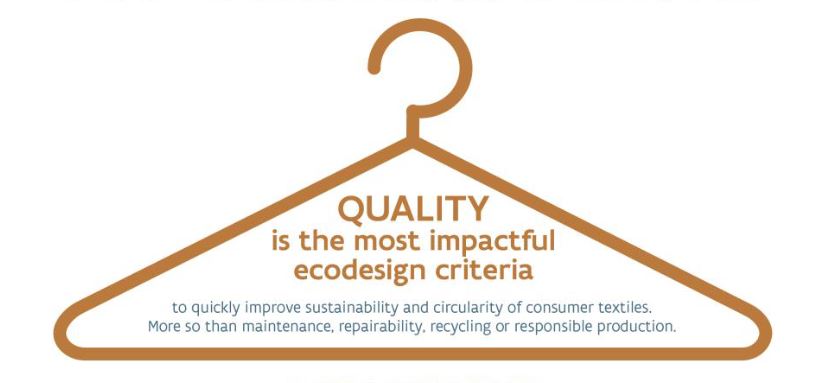
It focused on giving consumer textiles a longer lifespan with optimal reuse potential, making disassembly and recovery possible, and exploring upcycling and high-quality recycling. Extending the life of textile products turned out to have the greatest impact in the short term. Quality seems to be the most impactful ecodesign criterion when it comes to improving the sustainability and circularity of consumer textiles as quickly as possible.
The project defined seven product categories, identifying a set of minimum criteria for each. The report looks at existing labels, standards and regulations and the authors hope it will help expand the Ecodesign Directive by adding a textile category.