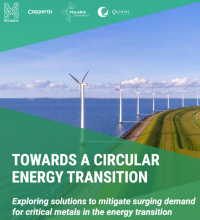
Concern continues to grow regarding the availability of critical metals. Such rare or scarce metals, like lithium or cobalt, are not only vital to the world’s major economies. They are also crucial for a transition to a renewable energy system in the Netherlands. At current levels, the global supply of these metals is insufficient, and the Dutch demand for them is no exception.
This study provides insight into the demand for critical metals domestically over the next few decades, to offer perspectives on how to reduce this demand, and to demonstrate the opportunities these new measures present to industry in the Netherlands.
RECICLOS provides incentives for recycling cans and plastic beverage bottles. When people recycle using the app, they receive points that can be used to try to win prizes or given to local projects.
SmartProSys (Smart Process Systems for a Green Carbon-based Chemical Production in a Sustainable Society) is a research initiative for sustainable chemistry and circular economy at the Otto von Guericke University in Magdeburg, Germany. It is funded by the Ministry for Science, Energy, Climate Protection and the Environment of the State of Saxony-Anhalt.
SmartProSys aims to replace fossil raw materials in chemical production with renewable carbon sources, thus contributing to a carbon-neutral society. The initiative involves researchers from the fields of systems-oriented process engineering, chemistry, mathematics, logistics, political science and psychology.
The initiative also organises events and issues a newsletter.
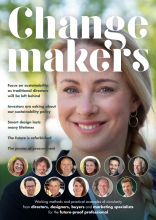
ChangeMakers is a magazine published by Circularities together with Circl/ABN Amro Bank. Readers can learn about working methods and practical examples of circularity from directors, designers, buyers and marketing specialists from companies like Philips, Bugaboo, Fairphone and Mitsubishi.
The magazine aims to inspire future-proof professionals with a wealth of interviews from people who really know what they're talking about and feel passionate about the circular transition. Each section tackles the circular economy from a different perspective: for instance, directors speak about how they need to steer their companies and designers talk about the principles underpinning their work.
If you're interested in circular issues, this magazine is well worth the read!
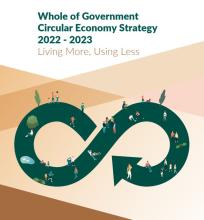
The Whole of Government Circular Economy Strategy is Ireland’s first national circular economy strategy. The Strategy is a key addition to the Government’s drive to achieve a 51% reduction in overall greenhouse gas emissions by 2030 and to get on a path to reach net-zero emissions by no later than 2050, as per commitments in the Programme for Government and the Climate Act 2021.
The Strategy explains what the circular economy is, why Ireland needs to deliver on a circular economy and how national policy will develop to support that goal. A circular economy can have positive environmental, economic and social impacts, such as reduced plastic pollution, new jobs and better quality, longer lasting consumer products.
The call for nominations of the Meeting Pack 2022 Awards (deadline: 14 February) is targeted at national and international companies whose innovations in sustainable packaging solutions contribute to industry development. Barrier packaging is a challenge for the circular economy.