Many political, business and civil society stakeholders are disappointed with the German Packaging Act. They feel it makes a comparatively small contribution to the circular economy. This study explains why they are disappointed:
Policy-making became entangled in disputes between proponents of a private and a public system for waste collection. Stakeholder fears of potential radical changes led to a stalemate
Fears allowed only incremental changes in the Packaging Act
The incremental changes could not resolve existing conflicts.
Based on its findings, the paper proposes possible courses of action. To create a shift to a circular economy, dialogue is needed using methods which explicitly address fears and overcome the current stalemate.
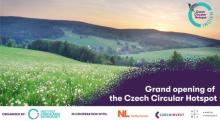
The Czech Circular Hotspot will be launched on 12 April with an opening ceremony in the Kampus Hybernská in Prague. The event is organized by the Czech Institute of Circular Economy.
This initiative is powered by APPLiA - Home Appliance Europe, representing home appliance manufacturers from across Europe.
The Circular Appliances website takes readers through each phase of the home appliance lifecycle, from design to end-of-use. There is a straightforward description of each phase and statistics on this sector.
The Circular Culturewebsite provides a platform for all those who would like to share their practices and recommend innovative solutions for different topics, such as food waste prevention, recycling and resource efficiency. There is a collection of circular projects.
The Italian Cartiera is an ethical fashion workshop founded in Lama di Reno, Marzabotto, in 2017 which makes leather and fabric items.
Believing strongly that work is an extraordinary tool for social inclusion, Cartiera offers paths for employment and integration of disadvantaged people, mainly refugees and asylum seekers.
Each year, humanity consumes resources equivalent to 1.7 planets. Sustainable resource use is therefore essential if we are to achieve our national environmental and climate objectives and the sustainable global development goals in the 2030 Agenda.
RE:Source is a strategic innovation programme co-funded by the Swedish Agency for Innovation Systems (Vinnova), the Swedish Research Council for Environment, Agricultural Sciences and Spatial Planning (Formas) and the Swedish Energy Agency. The programme focuses on research and innovation in sustainable material use.
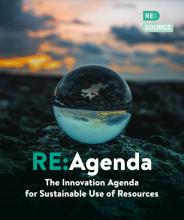
Within RE:Source, the RE:Agenda describes the innovation area of sustainable use of resources, which aims to support solutions that contribute to the efficient use of the earth’s resources within the planetary boundaries.
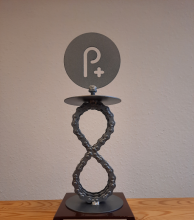
In 2022, the Procura+ Awards, an ICLEI – Local Governments for Sustainability initiative, will for the first time feature a category on "Circular Procurement of the Year". The deadline for submitting applications is 31 March 2022.