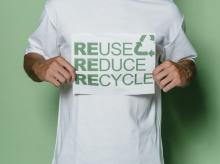
The goal of the circular economy is to take full advantage of all available resources through reducing, reusing, repairing and recycling. The recent Nordic Circular Summit in Copenhagen covered topics from public administration programmes to innovative techniques and renewable practices in the marine and food industries.
What can we learn about the circular economy from the Nordic perspective? Find some answers in this position paper.
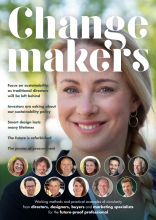
ChangeMakers is a magazine published by Circularities together with Circl/ABN Amro Bank. Readers can learn about working methods and practical examples of circularity from directors, designers, buyers and marketing specialists from companies like Philips, Bugaboo, Fairphone and Mitsubishi.
The magazine aims to inspire future-proof professionals with a wealth of interviews from people who really know what they're talking about and feel passionate about the circular transition. Each section tackles the circular economy from a different perspective: for instance, directors speak about how they need to steer their companies and designers talk about the principles underpinning their work.
If you're interested in circular issues, this magazine is well worth the read!
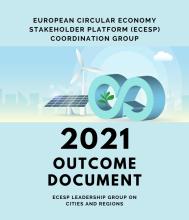
Cities and local areas play a major role regionally in promoting the launch and implementation of systemic changes needed for the transition towards a circular economy. The ECESP Leadership Group on Cities and Regions focuses on this approach. In 2021, three meetings and two EU Circular Talks (EUCT) were organised.
The Madeira Circular Agenda bolsters the position of the Autonomous Region of Madeira (RAM) as a circular economy hotspot.
It involves civil society and public and private entities in a system that seeks to keep materials in the economy, and to promote efficiency, circularity and sustainability as competitiveness and differentiation factors for the regional economy. The Agenda also aims to ensure that RAM companies act as circular economy leaders in their respective sectors, adopting best practices and creating innovative solutions based on circularity principles, particularly in sectors deemed critical for the region, namely agri-food, construction, tourism, social sector and the sea.
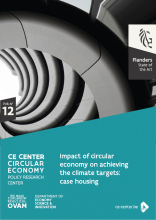
This report assesses how the circular economy contributes to reaching climate goals with regard to residential housing.
The draft Flemish climate policy plan covers the operational phase of housing and the material and carbon footprints of building and renovation. The report explores two ways to reduce these footprints: reducing the size of new housing and splitting existing buildings, and applying alternative construction methods or building materials and increasing the use of recycled and reused materials.