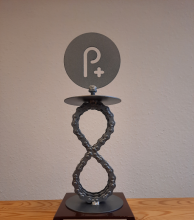
The Italian Cartiera is an ethical fashion workshop founded in Lama di Reno, Marzabotto, in 2017 which makes leather and fabric items.
Believing strongly that work is an extraordinary tool for social inclusion, Cartiera offers paths for employment and integration of disadvantaged people, mainly refugees and asylum seekers.
In 2022, the Procura+ Awards, an ICLEI – Local Governments for Sustainability initiative, will for the first time feature a category on "Circular Procurement of the Year". The deadline for submitting applications is 31 March 2022.
In this project, a subset of Science Based Targets Network (SBTN) partners have developed an approach with Bel Group for setting Science-Based Targets (SBTs) for nature in a single dairy farming landscape. A proof of concept for determining ecological thresholds has been developed that can be used as the basis for setting science-based targets for nature within a Dutch dairy landscape.
Project partners have worked with the Initial Guidance of the SBTN, and used the Biodiversity Monitor for the Dairy Farming Sector (Biodiversity Monitor) (an instrument developed through a collaboration of FrieslandCampina, Rabobank and the Dutch chapter of the WWF) as the basis for target and Key Performance Indicator (KPI) development.
This workshop used the concrete example of procurement of charging stations for electrical vehicles to link circular procurement to the energy transition.
The Cities & Regions Leadership Group in 2021 continued the work on the analysis of indicators to measure the transition to the circular economy in cities and regions.
This workshop capitalized on those discussion points, gearing the discussions towards the definition of operational cooperation leads between different initiatives supporting CE transition in cities and regions.
Concern continues to grow regarding the availability of critical metals. Such rare or scarce metals, like lithium or cobalt, are not only vital to the world’s major economies. They are also crucial for a transition to a renewable energy system in the Netherlands. At current levels, the global supply of these metals is insufficient, and the Dutch demand for them is no exception.
This study Towards A Circular Energy Transition serves to provide insight into the demand for critical metals domestically over the next few decades, to offer perspectives on how to reduce this demand, and to demonstrate the opportunities these new measures present to industry in the Netherlands.