The ECO-FUTURE project was a 24-month transnational cooperation project on Teaching Circular ECOnomy to the FUTURE Generations.
It produced a series of educational tools in the field of the circular economy. The materials produced provide an upskilling pathway programme with which teachers can help 6-12 year old pupils explore the topic and values of the circular economy and sustainability.
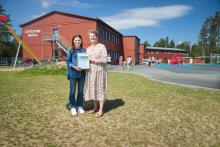
Götafors School in Sweden has been awarded the BREEAM In-Use Outstanding certification, proving that modular construction can be used to make a modern, energy-efficient and environmentally-friendly school.
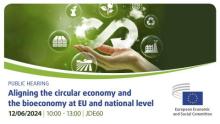
The European Economic and Social Committee will hold a public hearing in connection with its ongoing opinion on Aligning the circular economy and the bioeconomy at EU and national level. This opinion aims to enhance the synergies between bioeconomy, circularity and sustainability by promoting a more integrated and systemic approach to the circular bioeconomy.
The event will be webstreamed and interpreted into English, French and German. Participants will be able to interact.
ISO 59004 belongs to the ISO 59000 family of standards which is designed to foster a shift towards a circular economy.
Focusing on Circular economy — Vocabulary, principles and guidance for implementation, this standard advocates for a circular economy model which emphasises the sustainable management and renewal of natural resources.
It aims to help organisations contribute to the United Nations Agenda 2030 for Sustainable Development by facilitating the transition to circular use of resources. It sets out key terms and concepts, a vision for a circular economy, core principles and practical guidance for delivering on sustainability goals.
You can read a sample or purchase the full version on the ISO website.
ISO 59010 covers Circular economy — Guidance on the transition of business models and value networks.
This standard provides guidance for organisations wishing to take their value creation models and networks from linear to circular. It focuses on business-oriented strategies to implement circular economy practices at both organisational and inter-organisational levels. It complements ISO 59004 by offering more detailed guidance on assessing current value creation models, mapping value chains and value networks, and developing strategies for circularity. ISO 59010 is designed to help organisations make this transition effectively.
You can read a sample or purchase the full version on the ISO website.
BUILD UP, the European portal for energy efficiency and renewable energy in buildings, is hosting the third in a series of six webinars organised with the CircularB COST Action project. This one is on Investors, Developers and Insurance Providers.
It will explore successful projects and the challenges they face while implementing circular principles in the construction sector.
ISO 59020 covers Circular economy — Measuring and assessing circularity performance.
It provides a structured approach for organisations to measure and assess their circularity performance. It aims to standardise the process by which organisations collect and calculate data, using mandatory and optional circularity indicators.
This standard will:
help organisations align with global sustainability goals
enhance transparency and accountability in environmental reporting
support strategic decision-making for sustainable resource management.
You can read a sample or purchase the full version on the ISO website.
Together with ISO 59004 and ISO 59010, these standards offer a complete toolkit for achieving a circular economy, from principles to measurement.
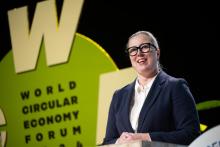
During the World Circular Economy Forum 2024, the European Commissioner for International Partnerships Jutta Urpilainen announced two initiatives intended to advance the circular economy at global level.
The establishment of the EU Circular Economy Resource Centre under the Global Gateway strategy will facilitate peer-to-peer exchanges and partnerships between EU and third-country stakeholders, fostering the uptake of sound circular economy policies and business models worldwide. The Commissioner announced a EUR 15 million commitment from the European Commission.
In addition, Commissioner Urpilainen launched the "SWITCH to Circular Economy in East and Southern Africa” programme. The European Commission will contribute EUR 40 million over five years to this programme, which will promote the transition to circular economies.
From 15 to 18 April, circular economy professionals from 168 countries came together at WCEF2024 to collaborate and turn ideas into action.
The Summary Report takes stock of the event: it presents the findings and key takeaways, including reports, tools and calls to action launched at the forum by partners, discussion highlights and key statistics.
The CEE2ACT project aims to empower Central and Eastern European countries to develop circular bioeconomy strategies. It has National Bioeconomy Hubs established in 10 countries across the EU.
It'll be holding the second webinar in its Knowledge Transfer series on 27 June.