The Coordination Group (CG) is a key component of the European Circular Economy Stakeholder Platform. Its members come from a broad spectrum of organisations and are responsible for enabling and implementing the Platform’s vision and activities. The mandate of the current CG will end in October 2025.
With a view to the future CG, the European Commission has published a call for proposals under the LIFE Programme for the Environment and Climate Action. The call will fund a project intended to strengthen the CG’s role in advancing the transition to a circular economy, including circular business models.
The European Commission's Directorate-General for Environment will hold an information session for potential applicants on Monday 8 July at 10:00 – 12:00 CEST.
Check out the new Environmental Footprint (EF) methods webpage and factsheet!
The EF methods are scientific tools and rules designed to calculate the environmental impact of products and organisations. Find out how businesses and consumers can benefit from them and see how they can be applied to a product.
The European Commission has published the guidance on the application of the 'do no significant harm' (DNSH) principle under the Social Climate Fund. The guidance covers the environmental safeguards that must be in place to benefit from the Social Climate Fund (over EUR 80 billion as from 2026).
The consultation closes on 13 August. A webinar will take place on 18 July to explain and clarify the criteria included in the DNSH guidance and allow stakeholders to ask questions.
BIOEAST has issued a Stakeholder Manifesto on “Sustainable supply chains and strengthened local processing of bioresources in Central and Eastern Europe”. They are calling for signatures from individuals and organisations, both within the Central-Eastern Europe macro-region and beyond.
The 6th European Recycling Conference, organised by EuRIC in partnership with Assofermet, will take place on 26 September in Milan, under the heading 'Recycling Today, Resourcing Tomorrow'. This event will also celebrate EuRIC's 10th anniversary: a decade of commitment to circularity and sustainable recycling practices.
Organisations using the mark are required to submit their calculations and observations, providing a database of 11 projects to date, which has been analysed to identify patterns of adoption. OFRA has now issued a report on their findings.
In practice:
The minimum second life furniture percentage was 60%.
All projects would have been able to achieve cost savings on a like-for-like basis.
All projects are attractive; no compromise in aesthetics was reported or observed.
How does digitalisation contribute to advancing circular procurement practices?
The ECESP Leadership Group on Circular Procurement organised the #EUCircularTalks webinar on 27 September at 10:00 – 12:00 CEST, offering valuable insights into global trends, practical tools, and real-world case studies. Participants had a chance to learn strategies to mitigate environmental and social impacts associated with ICT procurement and to implement sustainable procurement practices effectively.
The PREVENT Waste Alliance is currently looking for applications for the Innovate2PREVENT innovation contest. Innovate2PREVENT aims to inspire and mobilise creative minds from around the world to develop innovative circular solutions in the areas of
reuse, refurbishment and repair of electrical and electronic equipment
plastic waste prevention, and
supporting circularity through digital, interoperable and data-driven solutions.
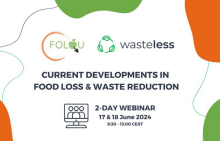
On 17 and 18 June FOLOU and WASTELESS projects will be hosting a two-day webinar Current developments in food Loss & waste reduction. The aim of the webinar will be to unveil the current developments in food loss and waste reduction to pave the way for a sustainable future.
The Circular Cities and Regions Initiative (CCRI) has opened a Call for experts to provide personalised support and mentorship to cities and regions looking to advance the implementation of circular systemic solutions.