INN-PRESSME is a consortium of 27 partners from nine countries helping European SMEs and companies develop bio-based solutions in the packaging, energy, transport and consumer goods sectors.
The project will shortly be holding its final event, bringing together investors, industry, policy makers, clusters, universities and research centres. It will be an opportunity to discuss the project results, technologies, market services and lessons learned, focusing on the innovativetest cases.
This analysis report was prepared in connection with the EU-funded Wood2Wood project and explores opportunities to advance the circular economy and overcome challenges to waste wood utilisation through supportive policy.
It outlines recommendations and policy options for improving waste wood utilisation through harmonised multi-criteria waste wood classification, refined and extended targets and obligations, enabling policy and policy which fundamentally reflects the lifecycle perspective. These recommendations and policy options serve as a point of departure to help shape the regulatory environment in support of improved waste wood valorisation.
INN-PRESSME helps European SMEs and companies develop bio-based solutions in the packaging, energy, transport and consumer goods sectors. They are organising a webinar to provide information about their services, test cases, new opportunities to test-before-investment, and network with industry players. The webinar will focus on transport and consumer goods.
The webinar will delve into strategies for launching and managing an investment fund dedicated to circular economy initiatives, focusing on insights from InvestCEC, Venionaire and exelixis capital AG. It will explore the financial barriers within the circular economy and strategies to overcome them.
Emma Pipó Ollé from the BioBoost project will also share key project insights on how they accelerate circular economy initiatives in Catalunya.
circulareconomy.earth is a project set up by Chatham House's Environment and Society Programme. It enables users to explore the policy and trade dynamics associated with transitioning from a linear to a circular economy model, as well as providing analyses of the associated opportunities and trade-offs.
This COP16 side event, organised by the ECESP's Leadership Group on Biodiversity & Climate, will explore the opportunities and anticipated benefits of using the circular economy as a tool for mainstreaming biodiversity in economic sectors.
The Horizon Europe POLYMEER project aims to establish a sustainable bio-based value chain for bioplastic products. By efficiently converting wet brewers’ spent grain into high added value materials, it is endeavouring to diversify the array of innovative material solutions capable of replacing traditional plastics.
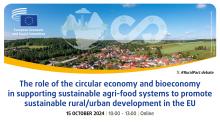
Are you interested in seeing how the circular bioeconomy can drive the development of sustainable agri-food systems across rural and urban areas in the EU? The EESC is organising a webinar on this very issue - hear what they have to say and ask your questions!