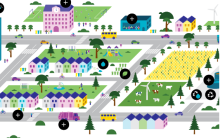
The HOOP project has provided Project Development Assistance to eight lighthouse cities and regions, supporting them with the development of large-scale urban circular bioeconomy initiatives focusing on making bio-based products from urban biowaste and wastewater. The partners have developed a suite of open-source tools to help cities and regions launch urban circular bioeconomy projects.
The FOREST project (Advanced lightweight materials FOr eneRgy Efficient StrucTures) aims to provide new and innovative green composites for sustainable and safe transport applications.
They are setting up an Advisory Policy Framework Working Group and looking for experts. Interested?
The 2nd World Congress on Recycling and Waste Management will explore Leading the way in advanced recycling and waste management practices.
It will foster awareness and encourage sustainable practices promoting an eco-friendly environment, delving into advanced topics in recycling and waste management, with the participation of researchers, ecologists, environmental experts and professionals in chemical, civil and mechanical engineering, environmental science and recycling.
On 1 November, the ECESP's Leadership Group on Biodiversity & Climate, in cooperation with the European Economic and Social Committee (EESC), the International Union for Conservation of Nature (IUCN) and the Ellen MacArthur Foundation (EMF), organised a COP16 side event exploring Towards a circular economy in harmony with nature.
This was the last side event hosted at the EU Pavilion, but it still attracted a high level of interest and participation. The recording of the session is available – have a listen!
The ECOFAP project aims to make shoe soles and heels from a material manufactured from tanned leather waste using 3D printing. This research project will help solve the problem of how to recycle leather scraps from the footwear manufacturing industry.
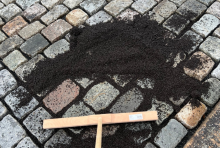
GIND is an innovative company dedicated to developing sustainable and long-lasting solutions for road surfaces and outdoor spaces. Its BIO DILE™ joint filler replaces traditional, resource-intensive and short-lived materials with more environmentally-friendly alternatives made from recycled, sun-dried stone aggregates and bio-based binders derived from cashew nut shells and natural asphalt. At the end of the filler's lifecycle, it can be fully recycled.
The World Circular Economy Forum 2025 (WCEF2025) will take place in South America. It will explore the potential of tropical solutions for sustainable growth, the power of regeneration and bioeconomy strategies, along with how the production sector is driving the transition toward a circular economy. The forum will also address key topics relevant to Latin America and the world.
Accelerator sessions will be held by WCEF collaborators on 15 and 16 May.
INN-PRESSME is a consortium of 27 partners from nine countries helping European SMEs and companies develop bio-based solutions in the packaging, energy, transport and consumer goods sectors.
The project will shortly be holding its final event, bringing together investors, industry, policy makers, clusters, universities and research centres. It will be an opportunity to discuss the project results, technologies, market services and lessons learned, focusing on the innovativetest cases.
This analysis report was prepared in connection with the EU-funded Wood2Wood project and explores opportunities to advance the circular economy and overcome challenges to waste wood utilisation through supportive policy.
It outlines recommendations and policy options for improving waste wood utilisation through harmonised multi-criteria waste wood classification, refined and extended targets and obligations, enabling policy and policy which fundamentally reflects the lifecycle perspective. These recommendations and policy options serve as a point of departure to help shape the regulatory environment in support of improved waste wood valorisation.