The BIOTRANSFORM project (Circular BIOeconomy TRANSFORMation for regions by enabling resource and governance networks) is hosting its final event. Come and find out about the project’s key achievements, practical outcomes and future potential to support Europe’s transition to a circular bioeconomy!
Poly(L-Lactide) (PLA), a fully biobased aliphatic polyester, constitutes around 30% of global production of biobased and/or biodegradable plastics.
It has attracted significant attention in the last decade due to its exceptional properties, such as high tensile strength, biocompatibility, (bio)degradability in various media, easy recyclability and good melt-state processability by the conventional processes of the plastic/textile industry. PLA has a number of applications, such as packaging and controlled release matrices for fertilisers and pesticides.
This paper looks at how blending PLA with other polymers can improve its shortcomings.
The 1st International Congress on Algae Biotechnology will bring together a dynamic mix of researchers, industry leaders, entrepreneurs and policy makers to shape the future of algae innovation.
Organised by PROALGA and GreenCoLab, this event will explore groundbreaking advances and practical applications of algae in sustainability, health and industry. Come and find out about the latest research, discover disruptive technologies and network with pioneers shaping the algae ecosystem!
The European Bioeconomy Clusters’ Alliance is a new strategic initiative uniting 12 national and regional bioeconomy clusters across Europe. Its mission is to amplify the voice of the bioeconomy sector, drive policy advocacy for a circular and sustainable economy, and enhance cross-sector collaboration.
The launch event will bring together key representatives from the European Commission, industry leaders and bioeconomy sector stakeholders.
SUM 2025 aims to promote more continuous interaction and collaboration across fields, encouraging sustained, multidisciplinary dialogue and strategic partnerships.
This conference aims to provide an inspiring platform to explore cutting-edge microbial solutions addressing global challenges in health, industry, the environment and the transition to a circular economy.
The network properties of the global waste trade were assessed using time series data of material and monetary flows between 2000 and 2022 from Chatham House's experimental database. The study focused on the distribution of monetary and material flows, policy recommendations and future research avenues useful for obtaining a more comprehensive understanding of socio-economic systems such as trade networks.
This work is a solid example of the application of network-based methods as an eco-mimicry approach for assessing the sustainability and fragility of socio-economic systems which can be helpful for researchers and policy makers interested in transitions towards regenerative circular economies.
AIMPLAS, the Plastics Technology Centre, is hosting the second International Seminar on Biotechnology Applied to the Plastics Sector.
This event will bring together over 20 international experts in biotechnology and sustainability to explore innovative solutions that will enable the plastics sector to move towards a more sustainable future.
SustainableSolutionsMatch is the first cross-sectoral virtual event empowering European businesses on their path to a sustainable and circular economy. It brings solution seekers and providers together to tackle real challenges and find practical answers.
Whether you're looking for innovative ideas or reliable partners, this event brings solution seekers and providers together to tackle real challenges and find practical answers.
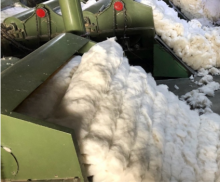
Le Marché is based in Pakistan and active throughout South Asia, with partners in Germany, France, the UK and the US. It has a two-pronged approach: it collects textile waste and recycles it for use as a secondary raw material, and it uses fibres made from agricultural waste.