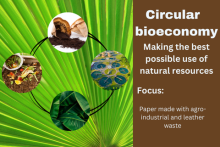
3R-BioPhosphate Ltd. has designed a proprietary 3R Zero Emission/Energy-Independent Pyrolysis Technology which promotes circular agriculture by transforming unexploited agricultural and food industry by-products into market-competitive, eco-safe and high-performance products.
This is a key event on waste management. 400 or so papers will be presented on issues such as waste policy and legislation and construction & demolition waste from disaster waste during various types of sessions, from Q&A sessions to practical design labs. Come and see what's being done in this field!
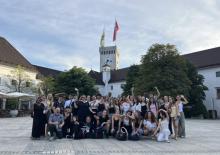
For the fourth year in a row, Ljubljana welcomed students from across Europe to co-create circular solutions in the heart of Slovenia. From 30 June to 4 July, 40 students took part in the Ecotopia Summer School, a programme which focuses on the circular economy through hands-on learning, collaboration and real-world application.
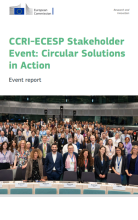
On 5 June, the Circular Cities and Regions Initiative (CCRI) and the European Circular Economy Stakeholder Platform (ECESP) joined forces to host a stakeholder event in Brussels and online as part of EU Green Week 2025. Have a look at CCRI's report on what was said during this event!
Leveraging waste wood as a sustainable resource is central to meeting Europe’s rising demand for wood-based products without compromising forests, biodiversity and the climate through virgin wood harvesting. To advance the circular economy and transform waste wood valorisation to meet future demand, digital product passports (DPPs) are an important digital tool for improving waste wood flows.
This CEPS In-Depth Analysis explores the challenges and opportunities for advancing waste wood valorisation and the circular economy using DPPs. After consulting with experts, some of the challenges and opportunities identified include data availability, access and integration, harmonised DPP content, limited stakeholder capacity and the costs of implementing DPPs.
Join the FertiCovery workshop, where participants will explore promising technologies for producing biofertilisers from secondary raw materials.
This interactive session will bring together stakeholders to share experiences, validate key case studies and shape the future of bio-based fertilisers.
Shifting to a circular economy, which is nature-positive by design, can build prosperity while tackling climate change and other global challenges. This study shows that a targeted set of investable and scalable actions in the built environment sector represents a significant economic opportunity for Europe, increasing resilience, competitiveness and the vibrancy of its cities. It also aims to show that circular and nature-positive strategies can be applied across sectors.
To illustrate how the benefits of a nature-positive, circular economy can be realised in a tangible, high-impact way, this study focuses on the built environment using new analysis drawn from quantitative modelling and interviews with expert practitioners.