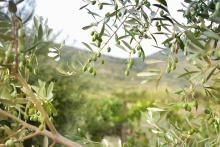
If you've ever been to Spain, for instance, you'll know that the Mediterranean has a lot of olive trees. That makes for a lot of waste. This project aims to use that waste to make animal feed, additives, packaging and biogas.
This webinar will introduce the concept of circular sanitation and will show the benefits of closing nitrogen and phosphorus loops. Using examples from all over Europe, it will present policies and actions that local and regional authorities can implement to make circular sanitation a reality.
This online session is a side event of the European Week of Regions and Cities.
The Horizon Europe project DECISO (DEvelopers of CIrcular SOlutions) aims to support European cities and regions as they develop financing schemes for circular economy initiatives. The project's final event will showcase how European cities and regions overcome financing barriers impeding circular economy initiatives.
BIOS MATER is a Horizon Europe project that aims to transform the construction sector by introducing advanced bio-based materials, applying circular economy principles and implementing Safe-and-Sustainable-by-Design solutions.
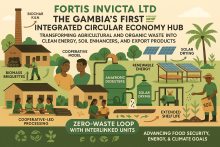
Fortis Invicta Ltd is launching The Gambia’s first integrated circular economy hub. This replicable model is aligned with the principles of the EU Green Deal and the African Circular Economy Alliance (ACEA) and is designed to transform agricultural and organic waste into clean energy, soil enhancers and high-value export products.
Nordic Sustainable Construction is a programme set up under the Nordic Council of Ministers. It aims to create a green transition with green growth in the Nordic societies by working toward carbon neutrality and a sustainable, circular and bio-based economy based on knowledge, innovation, mobility and digital integration.
In May 2025, it began three new work packages to create best practice guidelines for the industry and map industry structures and practices to find improved solutions.
The public consultation 'Towards a circular, regenerative and competitive bioeconomy' ran from 31 March to 23 June 2025. It invited people to provide feedback for the future EU bioeconomy strategy, to be adopted in the fourth quarter of this year. The summary report is now available, giving an overview of stakeholders had to say.