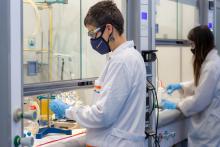
The EROS Project, with the participation of AIMPLAS and ITC, is working to develop new recycling processes to recover composite materials from the aeronautics and wind turbine sectors to manufacture new products for the transport and ceramics industries.
Reduce water use in Diageo's operations with a 40% improvement in water use efficiency in water stressed areas and 30% improvement across the company.
Other (Sustainable management of water)
To be achieved by:
Replenish more water than Diageo uses for their operations for all their sites in water-stressed areas by 2026.
Other (Sustainable management of water)
To be achieved by:
Invest in 150 projects to improve access to clean water, sanitation, and hygiene (WASH) in communities near Diageo sites and local sourcing areas in all of Diageo's water-stressed markets.
Other (Sustainable management of water)
Start Date:
Engage in collective action in all of their Priority Water Basins to improve water accessibility, availability and quality and contribute to a net positive water impact.
Recycling (also including specific waste streams)
To be achieved by:
Achieve zero waste in Diageo's direct operations and zero waste to landfill in Diageo's supply chain.
Recycled materials as part of raw materials demand (recycled content)
To be achieved by:
Ensure 100% of Diageo's packaging is widely recyclable (or reusable/compostable).
Recycled materials as part of raw materials demand (recycled content)
To be achieved by:
Continue to reduce packaging and increase recycled content in Diageo's packaging (delivering a 10% reduction in packaging weight + increasing the % recycled content of the packaging to 60%).
Recycled materials as part of raw materials demand (recycled content)
To be achieved by:
Ensure 100% of Diageo's plastics are designed to be widely recyclable (or reusable/compostable) by 2025 and achieve 40% recycled content in Diageo's plastic bottles by 2025, and 100% by 2030.
Other (Sustainable agriculture management)
To be achieved by:
Provide all of Diageo's local sourcing communities with agricultural skills and resources, building economic and environmental resilience (supporting 150,000 smallholder farmers).
Other (Sustainable agriculture management)
To be achieved by:
Develop regenerative agriculture pilot programmes in 5 key sourcing landscapes.
Other (Accelerate to a low carbon world)
To be achieved by:
Become Net Zero carbon in Diageo's direct operations.
Other (Accelerate to a low carbon world)
To be achieved by:
Reduce Diageo's value chain carbon emissions by 50%.
Other (Accelerate to a low carbon world)
To be achieved by:
Use 100% renewable electricity across all of Diageo's direct operations.
The paper also addresses the impact of changes in the value chains of the lighting sector as a result of embracing circular economy - be it by creating second-hand markets or by adopting lighting as a service business model.
In its conclusion, the paper describes how lighting manufacturers, designers, contractors and clients could work together to ensure that the benefits of the circular economy can be achieved.
Close the Glass Loop wants to achieve an average of 90% collection rate of used glass packaging at EU level by 2030 and a better quality of recycled glass.
MaterialDistrict is a match-making platform in the field of innovative materials, connecting material manufacturers and distributors with creative professionals and providing designers with information about materials.
The categories of materials are:
Plastics
Other naturals
Wood
Metals
Glass
Coatings
Ceramics
Concretes
Natural stones
There are listings for each material, with tags such as "biobased" or "recycling", making it very easy to find a circular material. Manufacturers and suppliers can promote and sell their goods, and creative professionals can look for the material that is right for their project.
Green Group Holding specialises in waste management in the broadest meaning of the term. Active across Europe, its headquarters are in Romania and its primary facilities are in Central East and South East Europe and the Baltic countries. It collects waste and recycles it into secondary raw materials.