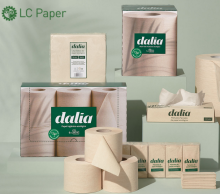
The project of LC Paper consists in the migration of all the plastic packaging of paper products (toilet paper, hand towels...) to cardboard packaging and folding.
SmartProSys (Smart Process Systems for a Green Carbon-based Chemical Production in a Sustainable Society) is a research initiative for sustainable chemistry and circular economy at the Otto von Guericke University in Magdeburg, Germany. It is funded by the Ministry for Science, Energy, Climate Protection and the Environment of the State of Saxony-Anhalt.
SmartProSys aims to replace fossil raw materials in chemical production with renewable carbon sources, thus contributing to a carbon-neutral society. The initiative involves researchers from the fields of systems-oriented process engineering, chemistry, mathematics, logistics, political science and psychology.
The initiative also organises events and issues a newsletter.
The BDI Initiative Circular Economy was created in April 2021 by the Federation of German Industries.
It is a network of more than 50 members that defines the potential of the circular economy and the necessary framework conditions through practical discussions. To this end, they are in close dialogue with policymakers in Berlin and Brussels and with the scientific community.
The sixth EU Raw Materials Week will take place from 15 to 19 November 2021, bringing together stakeholders to discuss policies and initiatives in the field of raw materials.
During the online event on Bio-based solutions for the green and digital transition on 16 November, you will learn how to upcycle woody biomass residues into valuable and innovative products.
Every year, about 100 billion tons of material are taken from the planet - but only 10 billion are circularized. The results of the TOP 10 study clearly highlight the differences between the systems: the waste culture and concepts are different in the Global North and the Global South, as are the objectives of the respective legislations.
In the Global North, the goal is to decouple waste generation from consumption. In the Global South, waste increases with per capita income; here, the old consumption patterns and images of the rich Global North are often emulated.
Scorecards are used in the study to assess individual materials and their circular maturity in the region. The overall score is shown in the summary per material.
This report connects the potential for resource efficiency, via circular economy and the value-retention processes (VRPs), with a policy-relevant lens. It is one of the first to quantify the current-state and potential impacts associated with the inclusion of VRPs within industrial economic systems.
In order to do that the assessment applies the different VRPs to a series of products within three industrial sectors and quantifies benefits in relation to the original manufactured product, such as the material requirement, the energy used, the waste as well as the costs and the generation of jobs.
The report also highlights the systemic barriers that may inhibit progressive scale-up including regulatory, market, technology and infrastructure barriers, and how they could be overcome.
The European NONTOX project aimed to eliminate hazardous and unpleasant substances from plastic waste and thus convert non-recyclable plastics and recycling waste into new resources.