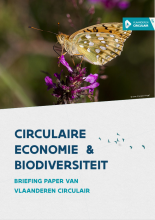
Climate change, pollution and biodiversity loss are combining to form an urgent global challenge. However, just like the crises themselves, the solutions to them are interconnected. In this briefing paper, Circular Flanders explores how the circular economy can contribute to protecting and restoring biodiversity.
You will discover why biodiversity is essential for our economy and well-being, how our current production and consumption system puts nature under pressure, and what role circular strategies can play in reversing this trend.
From reduced resource use and smarter design to regenerative production and new value models, this paper offers insight, inspiration and practical starting points.
The ECESP Leadership Group Towards a European Network of Circular Economy Hubs organised the #EUCircularTalks event on Bridging Local and European Networks: How Circular Hubs Can Drive Inclusive Regional Growth.
This event explored the role of EU networks in advancing circular economy goals across Europe, focusing on how local circular hubs can leverage their strengths to foster inclusive regional growth.
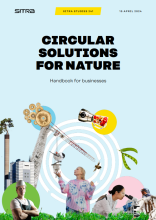
This is a comprehensive guide for businesses aiming to integrate circular business models into their operations with a view to effectively addressing biodiversity loss.
It guides companies through the process of identifying and prioritising their most critical biodiversity impacts.
Platform business models, exemplified by companies like Amazon, have disrupted industries and achieved global scale. This session on 17 April will discuss how these models, typically serving linear economies, can also promote circular and collaborative business models.
Participants will be able to explore how circular platforms, influenced by policies, technologies and trends, can drive the circular economy’s growth.
This Accelerator Session of the World Circular Economy Forum will be held in Brussels on 17 April 2024, co-organized by UNECE and the Mission of the Republic of Serbia to the European Union.
The session will look into how partnerships and regional stakeholder platforms drive the circular economy transition, particularly in regions where circular practices are emerging.
Join NBN on 6 February 2024 at this free kick-off event to mark the launch of the Belgian activities within the framework of the new 'Circular Economy' European standards committee and share your professional knowledge.
NBN ensures the development of standards in Belgium. It brings professionals and specialists from companies, organisations, governments and education to work on best practices in all sectors.
The uptake of green and digital technologies will massively increase demand for critical raw materials (CRMs). Since CRM supply chains are heavily concentrated, this exposes the EU to significant CRM supply risks. Several policy options emerge for the EU to address these risks. Domestically, there is potential to produce primary and secondary CRMs, yet significant time and resources will be required to scale up production.
Material substitution and resource efficiency might also play non-negligible roles with enough R&I support. Internationally, both trade policy and international cooperation (including within multilateral fora) hold significant prospects for mitigating supply risks. If properly managed, stockpiling CRMs can also help shield against short-term supply or price shock.
The World Resources Forum ’23 will take place in Geneva and online on 4-6 September 2023, enabling stakeholders to explore some of the key topics around sustainable resource use from the perspective of sufficiency, value chains and digitalisation.
A virtual side session on Circular Economy in Asia, Africa and Europe: sharing knowledge that makes value chains circular will be hosted on 7 September. It will focus on leveraging expertise and experiences from Circular Economy Stakeholder Platforms in ASEAN, Africa and Europe.
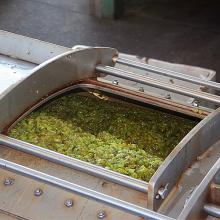
Arany Kapu (in English "golden gate"), a private company in Kunfehértó, Hungary, collects grape processing and winemaking byproducts from all the country's wine regions for valorisation in diverse forms, including distillation.
This webinar on 11 April follows the European Commission’s proposal for the European Critical Raw Materials Regulation on 16 March 2023. It aims to explore some of the opportunities and challenges linked to the EU’s new strategy for securing the supply of CRMs, both inside and outside the EU.
The regulation will have implications for the EU’s own internal environmental and circular economy-related objectives, as well as external impacts through shifts in demand for CRMs and trade flows. This event will identify focus areas for policymakers and the international community to ensure that the objectives of the regulation can be achieved by accelerating the shift to a global circular economy without hindering global sustainable development goals.