From shoemaker to wind energy park engineer: 7.5% of all jobs in Belgium are circular, shows new analysis by the King Baudouin Foundation and Circle Economy. The baseline measurement of employment in the Belgian circular economy provides insights into the nature and number of jobs in the country’s circular economy.
Ecopreneur.eu has created an overview of circular economy policy for all EU Member States, which reveals 28 different paths with inspiring best practices. Countries that lead the way typically have the highest waste production as well.
ACR+, the Association of Cities and Regions for Sustainable Resource Management, celebrated its 25th anniversary in June 2019. At this event, member organisations presented their respective work on the circular economy and committed to continue furthering the circular transition.
ACR+ has made substantial contributions to developing monitoring systems with corresponding indicator sets for urban and regional authorities. Among others, ACR+ has continued its Circular Europe Network projects within the Urban Agenda Partnership on Circular Economy, while also contributing to the CIRCTER final report on sub-national circular economy monitoring.
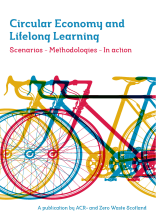
Following a 19 February 2019 workshop on Circular Economy Competences - Making the Case for Lifelong Learningin the European Parliament, ACR+ and Zero Waste Scotland have produced a report detailing how to introduce circular thinking in education, create vocational training programmes in waste management, repair and reuse, and developing training programs for local authority staff.
ACR+ has consistently advocated to accelerate the circular economy, while also showcasing urban best practice in circular economy throughout 2019 at various events across the European continent.
For four days in 2019, more than 750 company leaders, scientists and policy makers from all over the world came to Antwerp for the World Resources Forum organised by OVAM - the Public Waste Agency of Flanders featuring sessions on the power of the circular economy and the link with climate change, and an introduction to numerous pioneering projects and initiatives that are driving the transition.
Following successful 2017 and 2018 editions, both in Krakow, MEERI-PAS and the WRMC organised a 3rd edition of this conference in Racławice from 2 to 3 July 2019 for more than 200 participants.
With FarmacoAmico, CiboAmico and Cambia il Finale, the HERA has moved beyond its core business to actively prevent medicines, food and bulky goods from becoming waste.