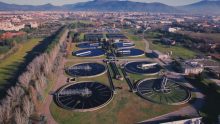
GIDA is a wastewater treatment plant that helps meet the needs of the local textile industry by supplying water of sufficiently high quality, while keeping water consumption to a minimum.
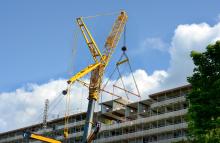
The Super Circular Estate project addresses the challenge of changing housing needs. The Parkstad Limburg region’s population, is estimated to shrink by 27% in the next 30 years, calling for a radical reorientation in housing facilities. The project aims at demolishing vacant outdated high-rise apartment buildings, and reuse their components to establish new social housing units.
After the 2014 elections, the new Roubaix municipality team wanted to change the image of its city and encourage a positive attitude towards both its inhabitants and France as a whole.
The roadmap aims at turning difficulties into advantages, generating a new dynamic. Based on theSustainable development strategy (since 2003), a zero waste policy is progressively implemented with a focus on cooperation and awareness raising among stakeholders.
The approach is global, even if some activities are implemented on a micro-scale (budget issue), mostly at the level of a city sub-district (Fresnoy-Mackellerie).
To enable the entire City of Roubaix to experience the transition to a zero waste economy, projects are open and accessible to all categories of population and businesses.
In October 2015 the Luxembourg government named the municipality of Wiltz a Circular Economy Hotspot. In February 2018 Wiltz renewed its political commitment with a Circular Economy Charter signed by its municipal council, by which it undertook to mainstream the circular economy in its future project and activities.
The 2023-2029 political declaration keeps up this momentum.
The Climate Pact was initially set up by Luxembourg's Ministry of Sustainable Development and Infrastructure. The goal was to enable municipalities wishing to tackle climate change to request State support by signing an engagement charter.
The Climate Pact 2.0 is operated by the Ministry for the Environment, Climate and Biodiversity. It includes measures on greenhouse gas reduction, energy efficiency, renewable energy, air quality, the circular economy and climate change adaptation.
Despite resource efficiency improving 41% between 2000 and 2016,with the Circular Economy Package and the initiatives set out in the accompanying Action Plan nearing completion, the EU institutions must acknowledge that the move to a more resource efficient or “circular” economy will take time. To invest in new business models, more resource-efficient processes and new supply chains for good quality secondary materials, businesses need the assurance that the resource efficiency agenda will remain a priority for the EU in the long term.
This briefing sets out a range of policy recommendations that the Aldersgate Group believe EU institutions should continue to pursue beyond completion of the Circular Economy Package to scale up business action on resource efficiency.
The World Economic Forum’s Future of Urban Development and Services Initiative has released its new White Paper on the Circular Economy in Cities: evolving the model for a sustainable urban future.
This White Paper traces the conceptual underpinnings of the Circular Economy, and explains why cities are key to accelerating the transition away from the traditional ‘take-make-dispose’ model. It draws on examples from cities around the world in areas that include: channelling used building materials to new building sites, water harvesting and reuse, reducing energy use, electronic waste, healthcare and procurement. It explains the opportunities in the Circular Economy for all stakeholders and the ways in which they can work together at city level.
'The circular economy and the bioeconomy — Partners in sustainability' is the third EEA report on the circular economy. It aims to support the framing, implementation and evaluation of European circular economy policy from an environmental perspective. It shows that the two policy agendas have similar objectives and areas of intervention, including food waste, biomass and bio-based products, and that they would benefit from stronger links, particularly in product and infrastructure design, and collaboration throughout the value chain.
The increasing demand for food, feed, biomaterials and bioenergy resources could worsen the over-exploitation of natural resources. By extending the lifetime of products and recycling materials, a circular bio-economy approach can help retain material value.
Circular Economy and Employment first summarizes the main definitions and conceptualisations of a circular economy, then clarifies the relationship to related concepts such as green growth and eco-innovation. This report is the outcome of a project estimating the employment effects of a circular economy.
The Circular Economy mainly focuses on savings on the shares of material, labour, energy, and capital embedded in the product. In finite systems it is intended to “design out waste”. An important difference is made between consumables (one or few time usage) and durables (years of usage) products. Material savings can be achieved by already established recycling and remanufacturing activities finally aiming at a “zero waste economy”.