Infinited Fiber has developed a technology that can turn cotton rich textile waste into new fibres for the textile industry. Not just once, but infinitely. These new Infinna™ textile fibres can be recycled again and again without decreasing the quality of the fibre.
The Relooping Fashion Initiative (2015-2017) was aimed at piloting and modelling the circular business ecosystem for textiles. This report covers the business ecosystem modelling work and introduces the project team’s crystallized vision of a higher-level system that enables the textiles industry to operate according to the basic principles of a circular economy.
The focus of the report is on explaining the principles of a circular economy in the context of textiles, and drawing a picture of the key material flows and types of actors along the value cycles from end-user back to end-user. The overall goal is to maintain the value of materials as high as possible, with minimum environmental impact. The different circular business models for textiles are introduced along the value cycles.
Renewcell's technology dissolves used cotton and other natural fibres into a new, biodegradable raw material: renewcell pulp. It can be turned into textile fibre, be fed into the textile production cycle and meet industry specifications. This is the link that has been missing from the cycle, and will enable the way fashion is produced and consumed to be transformed into a never-ending loop.
The ECOALF Foundation's Upcycling the Oceans project is an unprecedented worldwide adventure that has already removed over 1700 tonnes of plastic waste from the bottom of the oceans with the support of over 4000 fishermen.
ECOALF is a Spanish fashion company with a very keen interest in circularity and sustainability. It focuses on developing innovative methods to produce fabric that does not hurt the planet.
Textiles waste is relatively small in terms of weight as compared to other waste streams, but it has a large impact on human health and environment, and its rate is increasing due to the ‘fast fashion’ model. In this paper, the authors examine the French national programme for managing post-consumer textiles and clothing through a case study research.
France is the only country in the world implementing an extended producer responsibility (EPR) policy for end-of-use clothing, linen and shoes. The case highlights the benefits of using an EPR policy and provides interesting insights about the challenges faced by the textiles waste sector. For instance, the EPR policy has contributed to a threefold increase in the collection and recycling rates of post-consumer textiles since 2006.
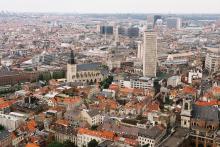
The Brussels Regional Programme for Circular Economy (BRPCE) is an integrated strategy involving 111 measures aimed at delivering circular patterns at the city level. The main objectives of the BPRCE are:
to transform environmental objectives into economic opportunities
to anchor economic activities within Brussels’ borders, maximising resource circularity and boosting entrepreneurship, and