This reflection paper explains how materials will enable solutions for a healthy, safe, resilient society and stronger economy to answer citizen demands. It includes strategic research agendas (SRAs), proposals, solutions, and recommendations of Alliance for Materials A4M community towards Horizon Europe in the post-COVID scenario. COVID-19 has affected the development of current strategies to face societal challenges and led to a reflection on a new global economic model where circular economy will play a prominent role.
The paper puts forward proposals for strategic research and innovation activities to the European Commission, Member States, and the European Parliament, taking into account the objectives of the Green Deal Priorities and Recovery Plan.
ZERO BRINE proposes a circular economy approach to reduce the negative impacts of brine from process industries and create economic value from the reuse of its constituents, such as sodium chloride, magnesium, calcium, sulphates, sodium bicarbonate, heat and fresh water.
The Circular Cities Week report presents the outcomes of the global event Circular Cities Week including circular challenges and opportunities for cities. It represents a crowdsourced tool for cities worldwide to implement the circular model.
The report explores the association between municipalities pursuing circular economy policy and investments in circular business that create jobs. It also takes a closer look at how businesses perceive this municipal support for circular economy.
The report summarises the findings of a study by the Circular Economy Club (CEC) and the CEC local chapters. The key learnings are as follows:
Closing the Loop (CTL) and Fairphone have partnered with other circular innovators, such as the Dutch government, in a project that is likely to become a game-changer for the electronics industry - proving that scrap batteries from Africa can be used to produce clean materials for the future.
In the first-ever shipment of scrap Li-ion batteries from West Africa to Europe, CTL has taken the first step towards proving that these scrap batteries can be a sustainable source for resources.
The results of this pilot have been recorded in a white paper, available here.
At Zero Waste Europe (ZWE), Larissa Copello is the Consumption and Production Campaigner working on upstream solutions for packaging and single-use plastic products, such as waste-free business models and reuse systems.
Zero Waste Europe (ZWE) is the European network of communities, local leaders, experts and change agents working towards the elimination of waste in our society. ZWE advocates for sustainable systems and the redesign of our relationship with resources to accelerate a just transition towards zero waste for the benefit of people and the planet.
ZWE is also part of Rethink Plastic, an alliance of +10 European NGOs working with European policy-makers to design and deliver policy solutions to tackle plastic pollution, in which Larissa Copello follows policy developments on single-use plastic and packaging.
EuroCommerce is the principal European organisation representing the retail and wholesale sector. It embraces national associations in 31 countries and 5.4 million companies, both leading global players such as Carrefour, Ikea, Metro and Tesco, and many small businesses. Retail and wholesale provide a link between producers and 500 million European consumers over a billion times a day. It generates 1 in 7 jobs, providing a varied career for 29 million Europeans, many of them young people. It also supports millions of further jobs throughout the supply chain, from small local suppliers to international businesses. EuroCommerce is the recognised European social partner for the retail and wholesale sector.
Nick Dornheim is advisor for Environment & Sustainability at EuroCommerce. He focuses on promoting retailers' and wholesalers' circular economy initiatives such as deploying more sustainable products, ensuring the right waste management infrastructure and empowering consumers.
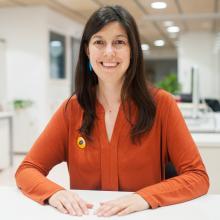
Mercè Boy Roura is a senior researcher and EU project coordinator at the Governance for Sustainability Unit at the BETA Technological Center, based at the University of Vic – Central University of Catalonia (Spain). She is an environmental scientist with a PhD in Experimental Sciences and Sustainability. She has more than 10 years of international experience in research and knowledge transfer projects in the field of sustainability and circular economy, and in particular focusing on the agri-food systems.
She is currently coordinating the Innovative Sustainable Economy (ISE) Mission of the Interreg Euro-MED programme, enhancing the legacy of the previous Interreg MED Green Growth community. The current ISE mission has a broader scope embracing innovation capacities – technological, social, institutional – and practices conducive to more sustainable production and consumption in the region, in line with the European Green Deal and European Cohesion Policy priorities and specific objectives. The ISE Mission is a multi-stakeholder network of projects connecting 155 partners from 18 countries in the Mediterranean region, with a well representation of the 4-ple helix stakeholders. It structures its work around four focus areas: Marine resources, Agri-food systems, Industrial Transition, and Resource Valorisation. Also, it supports projects by increasing their impact at policy level and fostering potential transfer and replication of their results in other regions and by other stakeholders. The ISE Mission is labelled by the Union for the Mediterranean (UfM), acknowledging its potential to advance cooperation in the transition to a green and circular economy in the Mediterranean region.