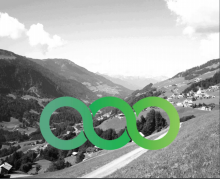
The Großes Walsertal region has developed a Circular Economy Strategy: it has set itself the objective of introducing circularity at every stage of the value chain, from production to consumption, repair and waste management. Smart product design and increased recycling and reuse activities will contribute to gradually close the loop of each product life-cycle in the region.
The Großes Walsertal communities act as role models by sharing tools, offering vouchers for local food stores (as part of the leisure activities funding) and implementing binding green criteria for events organised on their territory.
This Life DOP project operated in partnership with the Italian dairy company Consorzio Latterie Virgilio uses livestock waste in anaerobic digestion plants to produce renewable energy and renewable fertilisers (solid digestate) which are then exported to non-livestock areas.
MontECOlino has always had a keen interest in the environmental impact of its products. It has developed a carpet management system for the exhibition industry that recovers the carpet after use and transforms it into a new raw material for use in other sectors, in line with the circular economy concept.
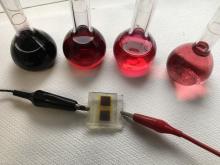
Giving value to waste as a precious renewable resource: for the first time, agri-food waste can be exploited to create photovoltaic cells that produce sustainable electricity. From the residues derived from winemaking (normally disposed of without any other use), researchers can extract natural dyes that capture solar energy, transforming them into a regenerated green resource.
This report follows on from the publication Circular Czechia from July 2018, exploring the circular economy in the Czech Republic.
The report explains how innovation has developed in this field since 2018, and aims to be an inspiration for firms, organisations and authorities on how to implement circular principles. It sets out a wide selection of good practices from the Czech Republic, and includes the retail, wastewater treatment, transport, construction and furniture sectors.
PU foam pressurised containers are used to fill gaps and to insulate and install window and door frames so as to make buildings airtight. OCF (one-component foam) producers have invested in a recycling company which recycles the metals in the packaging material, the reactive residual polyurethane prepolymer and the propellant.
In its position paper, Eurocities aims at contributing to the revision of the EU legislation on packaging and packaging waste by making proposals on:
packaging design (to facilitate separate sorting by citizens, and further dismantling for reuse or recycling, i.e. less complexity in packaging materials)
compostable/biodegradable plastic packaging (citizens cannot distinguish between biodegradable/compostable and more ‘conventional’ ones; the Commission should assess if this packaging can benefit the environment or create more littering and hamper waste collection, reuse and recycling)
reuse and recycling (new legislation should consider EU-wide mandatory labelling to identify packaging as reusable, recyclable or compostable) and
This publication sets out the state of play of the circular economy concept in Serbia and identifies the main obstacles that may hamper the shift to the circular economy paradigm. It also includes circular economy initiatives in Serbia and an analysis of linkages between the circular economy concept and the Sustainable Development Goals.
Addressing the circular economy only through waste management shows that the circular economy concept is still in its infancy in Serbia. According to the conclusions, the circular economy goes beyond