ReSBE 2026 aims to redefine how the built environment is designed, constructed, operated and renewed. It will bring together researchers, practitioners, innovators and policymakers to explore transformative solutions for a regenerative future.
Participants will gain insights across circular design and construction, digitalisation and innovation, lifecycle assessment and metrics, climate adaptation and resilience, policy and governance, market transformation, and society and education.
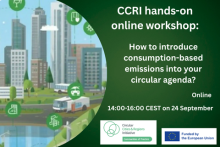
The CCRI hands-on online workshops will focus on a key implementation challenge identified in the CCRI communities of practice. They will translate those insights into practical tools, methods and examples that participants can apply in their own context.
This session will look at Consumption‑based emissions (CBE) which show the climate impact of what cities consume, not just what they produce. It will introduce what a Consumption‑Based Emissions (CBE) inventory is, what it can (and cannot) tell you, and how cities are beginning to use CBE insights to inform circular economy action.
Cities and regions across Europe are facing similar challenges - at different stages and in different contexts - when implementing the circular transition. Over the past year, CCRI communities of practice have brought practitioners together to openly share what works, what doesn’t, and where they get stuck.
This CCRI online workshop series builds directly on these insights, turning peer exchange into practical, hands-on sessions designed to help you move from ambition to concrete actions - no matter where you are in your transition.
This conference will present leading solutions and innovations for replacing fossil carbon with biomass, CO₂ utilisation and recycling.
There will be three days of discussions and presentations, focusing on the defossilisation of the chemical industry, fossil-free plastics, and policies, frameworks and regenerative business models.
Around a thousand participants and up to 90 speakers will meet in Berlin and exchange ideas for the circular transformation.
The congress will feature panel discussions with high-profile speakers from politics and science, best practices from business, inspiring keynotes on the transformation of our society and many opportunities for networking.
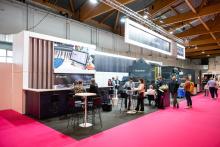
The Textiles Recycling Expo will focus on solving the pressing issue of textile waste, including the recycling of fabrics, clothing, footwear, fibres and non-wovens. It will feature the latest sorting, shredding and recycling technologies, pioneering textile recyclers, and fibre and fabric manufacturers using reclaimed materials.
The CCRI hands-on online workshops will focus on a key implementation challenge identified in the CCRI communities of practice. They will translate those insights into practical tools, methods and examples that participants can apply in their own context.
This session will focus on how planning can support the reuse of existing assets, limit land take, reserve space for circular activities and create the right conditions for circular design and material use in new developments.
This workshop will gather input for the development of proposals for phosphorus reuse and recycling rates from sewage and give an update on phosphorus recovery.
The technological development of Digital Product Passports (DPPs) is moving fast but can research and policy keep up? CE-RISE project partners will gather in Brussels for a morning of honest conversation about where DPPs actually stand: what's working, what isn't and what needs to happen next.
Over the past two and a half years, the Bio4HUMAN project has explored how bio-based innovations and circular approaches can contribute to more sustainable waste management in humanitarian contexts.
The final event will showcase the project’s key findings, lessons learned from field implementation and practical pathways for scaling sustainable bio-based solutions.