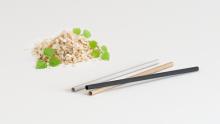
Sulapac has developed a fully biodegradable and microplastic-free material which can replace plastic. The bio-based material is both recyclable and mass-producible and is available as granules or final products.
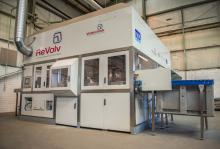
Votechnik has created a unique state-of-the-art recycling technology, the ALR 4000 machine, which safely removes hazardous waste materials from LCD flatscreen panels and monitors through a fully automated process.
Cycle Terre project aims to set up an industrial process to reuse soil extracted from the excavation sites of the new subway and other construction sites in Sevran, France.
The Super Circular Estate project addresses the challenge of changing housing needs. The Parkstad Limburg region’s population, is estimated to shrink by 27% in the next 30 years, calling for a radical reorientation in housing facilities. The project aims at demolishing vacant outdated high-rise apartment buildings, and reuse their components to establish new social housing units.
The educational project Ecotic Caravan was co-financed by LIFE+ and ran from 2014 to 2016. It aimed to raise awareness about environmental protection and sustainable development by focusing on efficient management of WEEE. The caravan travelled across Romania, organised workshops with school children and was parked in the main squares so that the general public could easily interact.
When Dublin's Ballymun suburb was scheduled for regeneration, a local environmental project redeveloped the neighbourhood's heating plant into a 3D textbook on repair, reuse and refurbish. The Rediscovery Centre, housed in the old boiler house, is now a cutting-edge creative space connecting people, resources and ideas that includes four social enterprises.
Renewcell's technology dissolves used cotton and other natural fibres into a new, biodegradable raw material: renewcell pulp. It can be turned into textile fibre, be fed into the textile production cycle and meet industry specifications. This is the link that has been missing from the cycle, and will enable the way fashion is produced and consumed to be transformed into a never-ending loop.
The PAPERCHAIN project aimed to deploy five novel circular economy models centred around making use of the waste streams generated by the Pulp and Paper Industry (PPI).