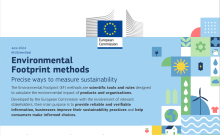
Check out the new Environmental Footprint (EF) methods webpage and factsheet!
The EF methods are scientific tools and rules designed to calculate the environmental impact of products and organisations. Find out how businesses and consumers can benefit from them and see how they can be applied to a product.
Organisations using the mark are required to submit their calculations and observations, providing a database of 11 projects to date, which has been analysed to identify patterns of adoption. OFRA has now issued a report on their findings.
In practice:
The minimum second life furniture percentage was 60%.
All projects would have been able to achieve cost savings on a like-for-like basis.
All projects are attractive; no compromise in aesthetics was reported or observed.
The EU grants for projects to reduce consumer food waste have been launched. The call for proposals is open to all interested stakeholders, with a deadline to apply by 25 September 2024.
The Single Market Programme grants are managed by the European Commission in collaboration with the European Health and Digital Executive Agency (HaDEA).
The aim of the call is to support stakeholders in their actions to prevent and reduce the amount of food waste generated at consumer level.
The European community PACCT for Sustainability (Product as a service to Accelerate Cooperation and Circular Transformation) will host a webinar on 25 June to explore how to finance product-as-a-service models.
Participants will be able to interact with RISE, ABN-AMRO and LINXFOUR, who will be talking about their experiences.
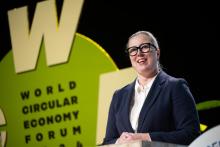
During the World Circular Economy Forum 2024, the European Commissioner for International Partnerships Jutta Urpilainen announced two initiatives intended to advance the circular economy at global level.
The establishment of the EU Circular Economy Resource Centre under the Global Gateway strategy will facilitate peer-to-peer exchanges and partnerships between EU and third-country stakeholders, fostering the uptake of sound circular economy policies and business models worldwide. The Commissioner announced a EUR 15 million commitment from the European Commission.
In addition, Commissioner Urpilainen launched the "SWITCH to Circular Economy in East and Southern Africa” programme. The European Commission will contribute EUR 40 million over five years to this programme, which will promote the transition to circular economies.
The CEE2ACT project aims to empower Central and Eastern European countries to develop circular bioeconomy strategies. It has National Bioeconomy Hubs established in 10 countries across the EU.
It'll be holding the second webinar in its Knowledge Transfer series on 27 June.
Wales (Cymru in Welsh!) will be hosting the 2024 European Circular Economy Hotspot: Circular Economy Hotspot Cymru 2024.
The summit will take place on 7-9 October in Cardiff. It will be an opportunity to share Wales' circular economy achievements and aspirations, and learn about circular economy solutions from the public sector, private sector and communities from Wales and beyond.
From Niche to Centre (City Centres as Places of Circular Lifestyles) is an Interreg Central Europe project. It aims to revitalise fading city centres by making local trade and consumption more circular and sustainable.
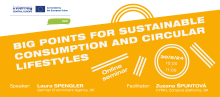
The project is organising a series of webinars: this one will explore Big Points for Sustainable Consumption and Circular Lifestyles. It will identify measures that are particularly important for effective environmental and climate protection.
Circe.med is a network of Mediterranean organisations involved in the transition towards ecologically and sustainable ecosystems. Established at the start of 2024, it wants to help deliver a carbon-free, circular economy which will improve people's quality of life.
The initiative aims to deepen, promote and implement a circular economy based on efficient and reduced use of natural resources.
Three main strands:
Sustainable food
Tourism and plastic in coastal areas
The built environment
The network's member organisations strive to deliver an effective circular economy in the Mediterranean which will benefit their individual ecosystems and the region as a whole.
The network is supported by an online platform, Circemed.org, which promotes cooperation and acts as a resource centre.
EU Green Week is an annual opportunity to raise awareness, promote and discuss European environmental policy. This year's focus is Towards a water resilient Europe.
There are two strands: the EU Green Week conference Towards a water resilient Europe, taking place on 29-30 May in Brussels, and the EU Green Week Partner Events, taking place between 29 May and 1 September around Europe. They will focus on water resilience, but there are several on circularity, too - such as Implementing circular economy with EU Ecolabel, taking place on 27 August in Latvia.