This webinar will introduce the concept of circular sanitation and will show the benefits of closing nitrogen and phosphorus loops. Using examples from all over Europe, it will present policies and actions that local and regional authorities can implement to make circular sanitation a reality.
This online session is a side event of the European Week of Regions and Cities.
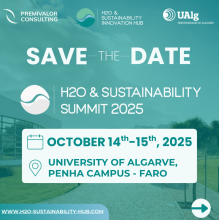
This is an international event bringing together leading experts, companies, startups, universities, research centres and institutions to promote dialogue, foster collaboration and accelerate innovation in key areas including the circular economy. It will include a high-level conference with renowned speakers addressing emerging challenges and solutions at the intersection of sustainability and technology.
PACCT for Sustainability is organising a two-day, in-person bootcamp designed to help professionals develop their profitable and sustainable Product-as-a-Service offers. Participants will gain insights, learn about tools and develop an action plan to start their circular business model journey.
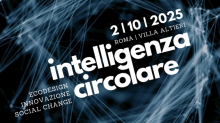
The Circular Intelligence (Intelligenza Circolare) event will be an international dialogue on two transformative levers of the circular economy: ecodesign and the potential of AI to enhance design, data management and the social and environmental impact of circular models.
The ASEAN Circular Economy Forum (ACEF) functions as an annual platform for the ASEAN policy community to engage with stakeholders and explore ways to foster a more effective transition to a circular economy through national policies and regional initiatives. ACEF 2025 will spotlight how circular economy solutions can drive inclusive development, reduce inequality and foster innovation across the region.
The 14th International Conference on Sustainable Development (ICSD 2026) aims to promote international collaboration in sustainability science and related disciplines.
The call for papers is now open! Deadline for submitting abstracts:10 March 2026.
The Horizon Europe project DECISO (DEvelopers of CIrcular SOlutions) aims to support European cities and regions as they develop financing schemes for circular economy initiatives. The project's final event will showcase how European cities and regions overcome financing barriers impeding circular economy initiatives.
Lost in transition? Join RREUSE and Rete 14 Luglio at their conference in Naples to explore how the social and circular economy can provide a compass towards an economy that is truly sustainable and inclusive.
BIOS MATER is a Horizon Europe project that aims to transform the construction sector by introducing advanced bio-based materials, applying circular economy principles and implementing Safe-and-Sustainable-by-Design solutions.