This conference aims to provide an inspiring platform to explore cutting-edge microbial solutions addressing global challenges in health, industry, the environment and the transition to a circular economy.
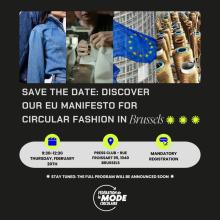
The Fédération de la Mode Circulaire (Circular Fashion Federation) is organising an event which will mark a milestone in their journey towards sustainable fashion: the release of their EU Manifesto for Circular Fashion. This manifesto outlines a policy roadmap for the European Union to leverage circular fashion as a means to bolster its textile industry, promote fair competition and champion environmental and human rights standards.
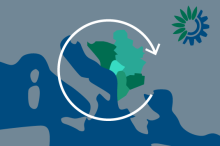
The Western Balkans need to boost their capacity to implement circular economy concepts and practices that go beyond waste management. The CSCP, VITO and the European Environment Agency accordingly launched the Capacity Building on Circular Economy in the Western Balkans project.
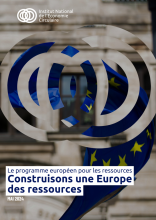
INEC, a leading think tank on issues related to the preservation of natural resources, has published its European Resource Programme.
It defines ways to preserve natural resources, focusing on six resources that will be crucial for energy, the economy and the environment: water, wood, li-ion batteries, permanent magnets, copper and building materials.
The Circular Economy package has merely resulted in measures targeting consumers rather than authorities. Positive initiatives such as the digital product passport aside, this vision of the circular economy is not sufficiently integrated into decarbonisation goals. INEC's realistic measures, the result of broad debate between stakeholders, aim to transform the economy and make it genuinely circular.
Did you know that digital technologies can facilitate the circular economy?
Big data analysis and product-service systems are just some of the innovative tools making it easier to re-design products, pool resources and promote product longevity.
This video highlights some of the key benefits for circular economy stakeholders!
The Circular City Centre – C3 is a competence and resource centre led by the European Investment Bank and co-funded by the European Commission as part of the Circular Cities and Regions Initiative. They are now calling for applications for advisory programmes to support cities at various stages of their circular transition.
AIMPLAS, the Plastics Technology Centre, is hosting the second International Seminar on Biotechnology Applied to the Plastics Sector.
This event will bring together over 20 international experts in biotechnology and sustainability to explore innovative solutions that will enable the plastics sector to move towards a more sustainable future.
Threads of Change is a new platform created by Humana People to People that highlights the transformative role of the second-hand clothing (SHC) industry in fostering sustainability, economic growth and social equity.
This initiative calls for supporting policies with a holistic perspective for a sector that is key to reducing environmental impact, creates green jobs along the global value chain, and contributes greatly to the EU’s GDP while minimising the use of scarce resources.
The platform's main aim is to spotlight the SHC industry's critical role in shaping a more sustainable textile sector. Help us build a case for an even more efficient and ambitious textile value chain by sharing your best practices or your views on the topic!
SustainableSolutionsMatch is the first cross-sectoral virtual event empowering European businesses on their path to a sustainable and circular economy. It brings solution seekers and providers together to tackle real challenges and find practical answers.
Whether you're looking for innovative ideas or reliable partners, this event brings solution seekers and providers together to tackle real challenges and find practical answers.
CircularPSP (Public Service Platforms for Circular, Innovative and Resilient Municipalities through pre-commercial procurement) is organising a Follower event in cooperation with ACR+.
ACR+ will present their work on aiding cities to go circular and CircularPSP will present the state of play, including an update from the three suppliers selected for Phase II.