ROCESP members include local and central government institutions, academic, research and innovation institutions, businesses and civil society representatives.
The platform acts as a network of networks, bringing together initiatives, experiences, problems and expectations in the field of the circular economy.
The platform:
disseminates knowledge
promotes dialogue and synergies between Romanian stakeholders
maps good practices in Romania
helps establish links between national projects
shows how Romania has adapted its economy to become more circular.
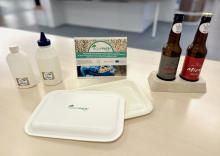
The BioSupPack project aimed to deliver novel, cost-competitive and versatile bio-based packaging solutions - based on PHA - that demonstrate high-performance for the packaging of food, cosmetics, homecare and beverage products as well as no environmental damage during and after use.
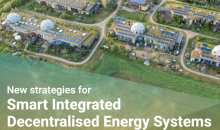
The goal of this study was to investigate the feasibility for Smart Integrated Decentralised Energy (SIDE) systems to contribute to the resilience, flexibility and circularity of the Dutch national power system infrastructure. The energy sector plays a crucial role in tackling the challenge of transitioning into a circular, renewable energy-based economy. For this reason, the Dutch government has decided to quintuple renewable power generation by 2030.
Thanks to recent developments in renewable energy technologies such as batteries, heat pumps and solar panels, but also biodigesters in which organic waste and black water are collected providing an alternative heating source, it is now possible to produce, convert and store energy locally within so-called microgrids.
Russia is among the larger suppliers of raw materials to the EU. It is the biggest world supplier for palladium, platinum and nickel, and a prominent one for aluminium and copper. The country still holds large untapped reserves of rare-earth elements.
This paper provides an overview of EU import dependency on raw materials and Russia’s share among EU sources of key supplies for low-carbon technologies. It then looks at prospects for meeting future material demands through circularity for three technologies, namely lithium-ion batteries, wind turbines and fuel cell electric vehicles.
The analysis is based on two scenarios with different levels of ambition. They aim to give an indication of the scale of potential benefits that can be achieved through circular approaches.
Almost all countries in the UNECE region, covering the US, Canada, Eastern and Western Europe, the Balkans, the Caucasus and Central Asia, have adopted national policies which are directly or indirectly related to the sustainable management of natural resources and the circular economy. On 6 April 2022, UNECE launched a new CIRCULAR STEP platform for policy dialogue on the circular economy.
This report, prepared by the Dutch Ministry of Infrastructure and Water Management, provides an analysis of the Dutch procurement system.
The Dutch Sustainable Public Procurement (SPP) approach embraces six themes, two of which are explored in this study: climate-neutral procurement and circular procurement. Included in these two themes are aspects such as CO2 and other greenhouse gas emissions, as well as the reuse of raw materials at the highest possible level of value. SPP is a highly topical issue for a steadily growing number of organisations in the Netherlands: action plans are being written, requirements and criteria are being formulated, and tools are being produced. Together, these activities are creating growing demand for instruments that evidence the impact of SPP.