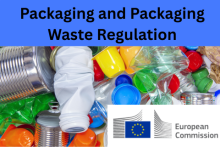
Packaging uses large quantities of primary raw materials. Increasing quantities of packaging are generated in the EU while the levels of re-use, collection and recycling remain low.
See what the Packaging and Packaging Waste Regulation covers and aims to achieve.
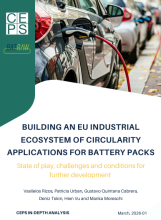
Electric vehicles are rapidly transforming the transportation landscape. Circularity solutions, namely recycling and second-life applications, are central to addressing environmental impacts and securing access to valuable materials in electric vehicle batteries (EVBs).
Consolidating lessons learnt from the BATRAW project, this report identifies three key enabling conditions for scaling up circularity applications for EVBs in the EU: (i) effective implementation of the EU policy framework underpinned by the Batteries Regulation; (ii) strengthened financial support for scaling up battery circularity applications; and (iii) further harmonisation of the standardisation landscape impacting EVB circularity.
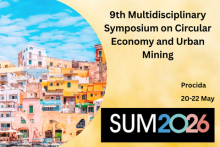
SUM 2026 will bring together leading international experts, researchers, practitioners and policymakers from various disciplinary backgrounds to explore the latest advancements and key challenges in the circular economy, sustainable resource management and urban mining.
Scaling up the circular public procurement of phones, laptops and workwear would clearly have significant benefits. Find out about opportunities and barriers when it comes to fostering value chain collaboration in the public procurement of ICT and phones.
This study explores how social ties and social impact can be accounted for in circular economy initiatives.
It examines how a local project managing organic waste and unsold goods fosters social ties in a priority urban neighborhood in France, and how these dynamics can be grasped using an alternative qualitative accounting approach.
It identifies key creators of social ties within local initiatives, proposes a social balance sheet highlighting factors that stimulate or undermine these ties and introduces a methodological approach for counting or recounting social impact in circular economy projects.
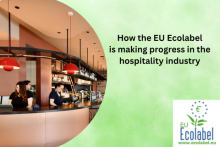
The hospitality market is shaped by rising environmental awareness and changing guest expectations, meaning that sustainability is a business imperative. The Accor Group, a hospitality group with over 5800 hotels in 110+ countries, has decided to focus on earning the EU Ecolabel.
The Ibis Styles and Ibis Budget Brest Centre Port in France is its flagship venture in this area and an example of how a hotel can reduce consumption and increase efficiency.
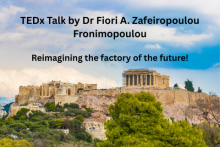
Dr Fiori A. Zafeiropoulou Fronimopoulou gives a talk which takes fashion as a starting point - and leads on to the social impact of the fashion industry, the limits of the linear system and how cities can become makers again!
This webinar will explore the latest developments in the Ecodesign for Sustainable Products Regulation and what it means for the fashion, clothing and textile industry, especially SMEs.
Businesses are key drivers of regional transformation. Support from public authorities and cooperation with research institutions, local administrations and networks is key to overcoming barriers and unlocking the potential of the circular economy.
This publication shows how companies in rural regions can drive the transition towards a circular economy. Drawing on examples from German and European model regions, it highlights how local enterprises implement circular business models, what opportunities arise for regional value creation and resilience, and which policy and governance frameworks can foster this transformation.
The findings show that the circular economy is not only an ecological necessity but also a strategic pathway towards sustainable and resilient regional development.
As the EU introduces Extended Producer Responsibility (EPR) for textiles under Directive 1892/2025, this conference explores how Romania can implement EPR for textiles, develop separate collection systems and accelerate reuse, upcycling and recycling