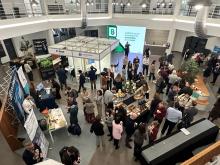
The eighth annual conference of the Italian Platform of Actors for the Circular Economy (ICESP) will be an opportunity to discuss good practices in the circular economy.
Learn about why they are important and how they can drive the circular transition!
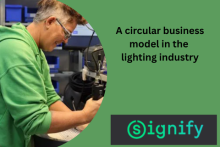
Signify Circle makes lighting products which are resource‑efficient and circular. It factors ecodesign, product-as-a-service, remanufacturing and repair into its business model.
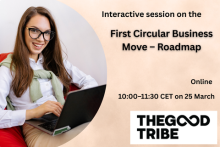
This small-group workshop is a guided walkthrough of The First Circular Business Move – Roadmap, a practical canvas series designed to help businesses move from early circular action to intentional, long-term change.
It will be an opportunity to get a clearer sense of how to approach your circular transition and to give feedback on the tool.
AIMPLAS held its 9th International Seminar on Biopolymers and Sustainable Composites earlier this week. It was an opportunity for technical debate on regulation, certification and innovation in the field of biopolymers. Have a look at the innovations presented!
DPPSkop is a comprehensive B2B SaaS platform developed to meet the Digital Product Passport (DPP) requirements mandated under the EU’s Ecodesign for Sustainable Products Regulation.
The platform enables manufacturers, particularly in high-impact sectors such as textiles, batteries and electronics, to digitise, manage and share the lifecycle data of their products.
This event will bring together experts, policymakers, researchers and practitioners to discuss how innovation, governance and finance can accelerate the transition toward a circular economy.
This EU Circular Talk edition explored how the EU Ecolabel acts as a ready-to-use tool helping businesses deliver circularity, meet rising legislative expectations, and gain a competitive edge across EU markets. Check the full article to access the recording and presentations.
Bio-based plastics are wholly or partly derived from biomass and so help reduce reliance on fossil fuel-based plastics.
Feedstocks include primary and secondary sources. Agricultural and forestry residues and post-consumption organic waste have lower environmental impacts than primary feedstock but collection and transportation issues make scaling up a challenge.
As a whole, the sector is struggling to achieve real scale: bio-based plastics account for only 0.5% of global plastics production and are projected to reach 1% by 2030.
Scaling is hampered by feedstock sustainability, competitiveness, technological maturity and cost: currently, producing bio-plastic is generally 1.5 to 2 times more expensive than conventional plastics.