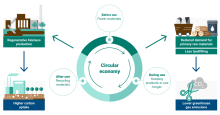
This briefing from the European Environment Agency looks at the links between the circular economy and climate change mitigation. Many reports and studies argue that this link exists, but estimates of its potential diverge greatly. See what the EEA has to say about why that is!
The SUINK project aims to design and implement sustainable, flexible and printable self-charging power systems to supply power to a wide range of sensors for the automotive industry.
This webinar will present their printed, recyclable piezoelectric harvesting system designed to harvest electrical energy from mechanical vibrations, a printed bio-based supercapacitor for energy storage and the SUINK self-charging power system.
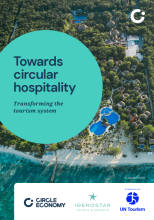
This white paper provides one of the first action frameworks for the circular transition of the hospitality industry. It shows how circular strategies are both essential for the long-term wellbeing of the destinations, ecosystems and communities on which hospitality depends and a clear business imperative.
It identifies 10 key systemic barriers hindering progress, including the absence of a shared industry framework. In response, it focuses on 5 strategic opportunities through which circularity can help overcome these challenges: procurement, operations, built environment, business and guest culture, and destinations. To support wider adoption and scale impact, the paper also identifies 6 key enablers that can help unlock circularity across the whole value chain.
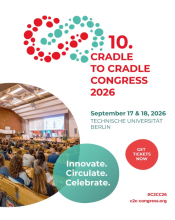
Around a thousand participants and up to 90 speakers will meet in Berlin and exchange ideas for the circular transformation.
The congress will feature panel discussions with high-profile speakers from politics and science, best practices from business, inspiring keynotes on the transformation of our society and many opportunities for networking.
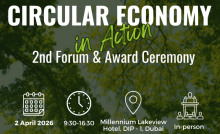
This event will bring together circular economy leaders, pioneers, practitioners, explorers and researchers across industries and supply chains to celebrate circularity.
Participants will share opportunities, good practices, real-life cases and lessons learned from implementing the circular economy.
This report aims to provide a diagnostic to underpin the Clean Industrial Deal and the Single Market Strategy. It responds to calls from businesses to prioritise competitiveness.
The circular economy is identified as one of the keys to making the EU more competitive. The report looks at the barriers to this transition, such the higher cost of secondary raw materials, the difficulty of scaling up and replicating solutions in a fragmented market and diverging national regulatory frameworks which hinder the development of enhanced supply chains and discourage upscaling innovative recycling facilities.
The Critical Raw Materials Act and Ecodesign for Sustainable Products Regulation will enhance conditions for circular business models and the circular transition needs to pick up the pace.
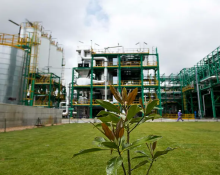
RUNFASTER4EU is a new Horizon Europe Innovation Action which aims to show that it is possible to use unproductive, polluted or otherwise unused land to grow crops as feedstock for biobased products. This approach does not take land away from food or feed production while supporting the EU's bioeconomy.
From a circular economy perspective, maintaining most of a building's structure is preferable to building a new one.
Repurposing offices into housing can expand affordable supply in high-demand areas while supporting inclusion and climate objectives.
This report aims to inform policymaking by exploring examples from various EU regions and identifying regulatory, technical, financial and social aspects that enable successful conversions of offices to affordable housing. It also highlights the multiple benefits of repurposing non-residential buildings into housing and provides insights into essential measures for scaling up such initiatives.
Berlin's Zero Waste Agency aims to make Berlin a zero-waste capital. As well as providing useful information via its website, it organises Zero Waste Action Weeks each year and brings together stakeholders in working groups and general meetings.