The zero waste consultancy wegozero has mapped more than 1000 businesses with zero waste potential in four European cities. Its maps are available for a monthly subscription and aim to tell people which businesses in their city are sustainable and geared to circular thinking.
Although previous researchers have explored the circular economy practices of different businesses in various contexts, only a few papers have focused on the sustainable preparation and consumption of food in the tourism and hospitality industry. This paper sheds light on case studies from hotels, restaurants and cafés that are located in urban tourism destinations.
This research suggests that catering businesses can implement a number of responsible initiatives by introducing preventive measures and recycling practices to curb food loss and the generation of waste. In conclusion, it finds that there is scope for regulatory authorities and policy makers to encourage hospitality practitioners to minimise food waste.
The submission deadlines for LIFE calls for proposals 2022 have been communicated. All LIFE Calls for proposals 2022 are expected to be published on the Funding & tender opportunities portal on 17 May 2022.
SmartProSys (Smart Process Systems for a Green Carbon-based Chemical Production in a Sustainable Society) is a research initiative for sustainable chemistry and circular economy at the Otto von Guericke University in Magdeburg, Germany. It is funded by the Ministry for Science, Energy, Climate Protection and the Environment of the State of Saxony-Anhalt.
SmartProSys aims to replace fossil raw materials in chemical production with renewable carbon sources, thus contributing to a carbon-neutral society. The initiative involves researchers from the fields of systems-oriented process engineering, chemistry, mathematics, logistics, political science and psychology.
The initiative also organises events and issues a newsletter.
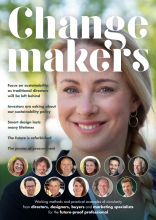
ChangeMakers is a magazine published by Circularities together with Circl/ABN Amro Bank. Readers can learn about working methods and practical examples of circularity from directors, designers, buyers and marketing specialists from companies like Philips, Bugaboo, Fairphone and Mitsubishi.
The magazine aims to inspire future-proof professionals with a wealth of interviews from people who really know what they're talking about and feel passionate about the circular transition. Each section tackles the circular economy from a different perspective: for instance, directors speak about how they need to steer their companies and designers talk about the principles underpinning their work.
If you're interested in circular issues, this magazine is well worth the read!
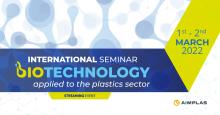
AIMPLAS organises its 1st International Seminar on Biotechnology Applied to the Plastics Sector on 1-2 March 2022, to discuss the main RDI developments and global solutions for the entire value chain. It tackles the use of organic waste to obtain new plastics, enzymatic recycling processes for plastics, the role of biotechnology in recovering complex waste, converting plastic industry scrap, etc.
Horizon Europe Framework Programme has published a call on circular economy and bioeconomy sectors. The deadline for submissions is 15 February 2022.
The successful proposal will support the European Green Deal with a topic that will support the transition towards a sustainable, regenerative, inclusive and just circular economy across regions of Europe at local and regional scale.
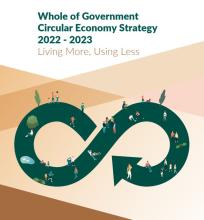
The Whole of Government Circular Economy Strategy is Ireland’s first national circular economy strategy. The Strategy is a key addition to the Government’s drive to achieve a 51% reduction in overall greenhouse gas emissions by 2030 and to get on a path to reach net-zero emissions by no later than 2050, as per commitments in the Programme for Government and the Climate Act 2021.
The Strategy explains what the circular economy is, why Ireland needs to deliver on a circular economy and how national policy will develop to support that goal. A circular economy can have positive environmental, economic and social impacts, such as reduced plastic pollution, new jobs and better quality, longer lasting consumer products.