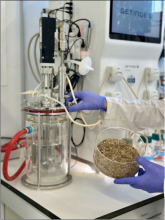
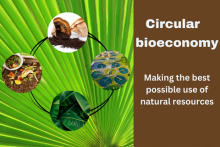
Every year, the Valencian agricultural sector generates around 800 000 tons of plant waste, such as rice straw and citrus pruning waste. Unfortunately, the methods used to recover this biomass are costly. The EU-funded BIOVALSA project aims to develop innovative processes for manufacturing sustainable bioplastics from these waste streams.
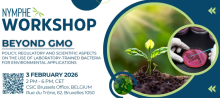
This workshop will look at how laboratory-trained bacteria can help restore polluted soils and waters, and how policy and regulatory frameworks can support circular outcomes while safeguarding public health and the environment.
SustainableSolutionsMatch empowers European businesses on their path to a sustainable and circular economy. It brings solution seekers and providers together to tackle real challenges and find practical answers.
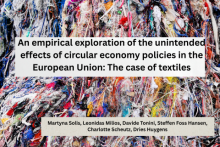
The EU strategy for sustainable and circular textiles calls for policy interventions to reduce waste and overconsumption in this sector. However, future policies may have unintended impacts.
This study examines the unintended effects of past and future textile policies, with the goal of evaluating scientific tools for improving ex ante impact assessments and so mitigating unintended effects in future.
It finds that the unintended impact of a policy can be just as important as the impact that it was designed to achieve. Stakeholder engagement, combined micro- and macro-economic modelling, extended consideration of the EU's resilience and the inclusion of a behavioural and social component are all key to reducing unintended impacts.
The webinar will explore how advanced materials and circular design approaches are shaping the future of high-performance composite applications, with a focus on wind energy.
The first horizontal call in support of the Clean Industrial Deal has just opened with a budget of EUR 540 million. Organised under the Horizon Europe 2026–2027 work programme, the call has two topics: Decarbonisation of energy-intensive industries and Clean technologies for climate action. See what each topic covers!
Each year, the EEA takes stock of progress towards meeting the six objectives of the 8th Environment Action Programme (EAP), one of which is a regenerative circular economy.
The report finds that the EU's consumption exceeds the planet's 'safe operating space' for resource extraction and its consumption is unlikely to decrease significantly this decade. It is also unlikely that per capita total waste generation will significantly decrease by 2030.
Legislation already in place to prevent waste generation and improve waste management — including through recycling and the reuse of materials — has contributed to a relative decoupling of raw material consumption and waste generation from economic growth but significant additional efforts are needed to reach the 2030 targets.
Specialists, companies and key stakeholders from the packaging value chain will address the challenges and opportunities posed by the transition toward more sustainable models and explore the latest trends in barrier packaging materials and solutions.
This edition of Science for Environment Policy is a collection of seven previously published articles on scientific studies relevant to the circular economy. Read about battery collection, whether laypeople can really understand LCA data, chemical recycling and why people throw away clothing.