This study commissioned by the EEA assesses the potential to enhance the circularity of bio-based waste within the framework of the 2025 update of the EU Bioeconomy Strategy.
It focuses on identifying opportunities to move bio-based waste streams up the waste hierarchy, retain technical and economic value and minimise environmental impacts.
The study maps waste generation, collection, treatment and reporting practices across the EU and the technologies for managing biowaste.
It finds that better separate collection and development of high-value recovery pathways could reduce environmental pressures, greenhouse gas emissions and import dependence, though technological feasibility and scalability remain uncertain.
The FertiCovery project focuses on nutrient recovery and the production of fertilisers from biowaste, manure and wastewater.
This workshop will bring together project partners and stakeholders to review, discuss and validate the final list of indicators which will serve as the basis for benchmarking nutrient recycling and biobased fertiliser production technologies.
This Nordic Track session will give key insights from the Circular Build Forum, provide an overview of the Nordic Circular Construction project and launch the Nordic Community for Circular Construction.
Learn how the Nordic Circular Construction project intends to scale commercially viable circular construction solutions across the Nordic markets!
A new EU-funded project has been launched to develop a deposit-return system for used textiles across Europe. Known as TexMat, the initiative will reward consumers for returning reusable and recyclable items, while notifying producers when discarded textiles require waste management.
The ESNI-NERM (The European Sustainable Nutrient Initiative (ESNI) Conference and the Nutrients in Europe Research Meeting (NERM) conference will be an opportunity to present and discuss scientific evidence and technological innovations that can support the European Commission’s goals on nutrient management.
The ESNI-NERM conference will be an opportunity to present and discuss scientific evidence and technological innovations that can support the European Commission’s goals on nutrient management.
The conference will take place on 28-29 April and they are calling for abstracts. Deadline: 30 January!
This public hearing is organised in connection with the opinion being prepared by the EESC on A comprehensive strategy for nature-based biodegradable materials to foster circularity and resource efficiency, strengthen the agri-food sector and scale-up the EU bioeconomy. The hearing will gather input for a comprehensive strategy for nature-based biodegradable materials.
LOOP Forum is the leading Nordic meeting place for companies working with the circular economy and resource efficiency.
It will bring together decision-makers from across industries to explore how circular solutions can strengthen competitiveness, secure access to critical resources, and build more resilient European value chains.
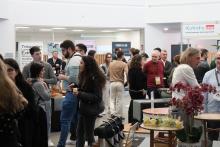
This conference took place on 10-11 December in Spain, bringing together over a hundred plastics recycling specialists who debated competitiveness and regulation in plastics recycling in Europe. See the highlights!
Waste To Resources Latvia - boosting regional sustainability and circularity is a Lifeproject which provides a framework for coordinating, testing and scaling up circular economy solutions at national level, involving multiple partners and thematic implementation areas.
So far, it has launched national digital platforms for reuse and industrial symbiosis, improved data availability and decision-support tools for the waste management sector, and enhanced quality assurance of secondary materials through an accredited polymer testing laboratory.