The Hungarian Ministry of Finance approved a HUF 197.85 million non-refundable grant for Hutoepito, the parent company of KleanLabs, in order to fund research, development and innovation activities under the Upcycling of closed-cell rigid polyurethane foams project, which ran until 31 January 2025.
The European Commission is launching a survey to collect data on food loss and waste prevention initiatives along the food supply chain.
This survey aims to collect relevant information by 3 October 2022 on both ongoing and concluded food waste prevention initiatives in order to analyse their efficiency, effectiveness, and impacts.
The Lithuanian Commune DIY, a team of skateboarding professionals and enthusiasts, collects old, broken Canadian maple hardwood skateboards that have lost their original purpose and recycles them 100 %. The new products made of skateboards are sustainable, strong and have a new life span which is longer than the one of an average skateboard deck.
The framework for inclusive circular trade is designed to help guide trade and trade-related circular economy and development policies, practices and agreements to ensure these all work towards a shared goal of an inclusive circular economy.
This paper sets out a framework for inclusive circular trade, intended to enable a pathway in which circular trade helps to promote fair, inclusive and circular societies. The framework was developed through the work of an alliance of organizations spanning Africa, Southeast Asia, Latin America and the Caribbean, and Europe.
Chatham House does not express opinions of its own. The opinions expressed in this publication are the responsibility of the authors. A Spanish translation of the paper is also available as a PDF.
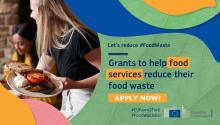
The European Commission is currently accepting proposals for EU grants to help stakeholders take action against food waste. Fighting against food waste is one of the key action strands laid down in the EU’s Farm to Fork Strategy, which aims to make food systems fair, healthy and environmentally friendly.
This report explores whether there are limits to robustness of a socio-economic system as the result of a linear metabolic structure, and how those limits could theoretically be affected by its transition to a circular economy.
First, it looks at how the economic openness of the EU27 would affect the value of its circularity rate theoretically. Then it develops a conceptual framework based on regenerative economics and indicators from ascendency analysis and ecological network analysis.
This framework is used to assess a theoretical future case where the EU27 manages to successfully transition to a CE within its given linear material flow metabolism.
The results show that there are limits to robustness, and which do not necessarily correspond to a maximum circularity rate.
Tarkett is pioneering post-use flooring recycling in Europe. It is working with IKEA to transform used Tarkett flooring from the IKEA Kungens Kurva store into new flooring.
Tarkett worked with the Swedish environmental company Ragn-Sells to develop carbon negative mineral fillers for vinyl flooring using Estonian oil shale ash.