This COSME project aimed to implement a capacity building and support scheme for SMEs in the tourism sector that will lead them to reach different levels of circular economy innovations within a transition system.
The circular economy has become a priority policy topic in Europe (EC, 2015, 2020) and is a key objective of the European Green Deal. There is increasing interest in the potential for altering traditional business models to enable materials and products to be reused and remain in the economy for as long as possible — as opposed to being used once and then discarded.
This briefing presents an analytical framework, identifying actions that can be taken to implement circular business models effectively.
Plastics play an essential role in modern society, but they also lead to significant impacts on the environment and climate. Reducing such impacts while retaining the usefulness of plastics requires a shift towards a more circular and sustainable plastics system.
This report tells the story of plastics and their effect on the environment and climate, and looks at their place in a European circular economy.
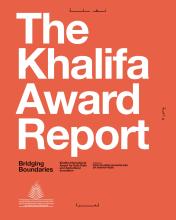
Date palms are becoming ever more important globally and in the MENA region (Middle East and North Africa). The Khalifa Award Report, inspired by 46 contributors in 21 countries, focuses on the 5 Ps -People, Planet, Prosperity, Peace and Partnerships - which shape the United Nations 2030 Agenda for Sustainable Development.
The bio-circular economic potential of the date palm industry has yet to be explored. In some cases, it is a necessity that can save lives in oases prone to fire hazards caused by climate change; it can also provide new green jobs in the sustainable economy transition. The European circular economy transition can serve as a model for adaptation in the MENA region.
More info on date palm recycling on pages 162-3 of the report.
Circular Change focuses on establishing and fostering dialogue between stakeholders, particularly as regards creating circular economy roadmaps. It promotes new narratives, exchanges knowledge and enables innovation.
The RECITURF project is developing new methods for recycling artificial turf so that it does not end up in landfills. New artificial turf can be manufactured using the different plastics recovered from waste turf.