The Federal Council for Sustainable Development Belgium has issued a formal response to the Federal Belgian Action Plan on the Circular Economy (in French). The council addressed issues regarding the substance and procedure of the action plan.
Procedural issues include the vagueness of the plan's exact intentions and deadlines as well as the lack of a better governance mechanism. Substantive issues include:
more focus needed on the social challenges associated with the introduction of a circular economy
more focus on the impact on the climate of increasing digitalisation
recycling of critical metals, and
importance of removing all known barriers (regulatory, fiscal, financial, etc.) to the circular transition.
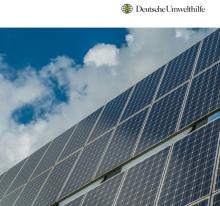
Every year, huge numbers of photovoltaic modules are being installed. This solar energy expansion greatly furthers the ecological transformation of the energy system. But to solve the climate crisis every aspect has to be taken into consideration. This is why this white paper wants to shine light on challenges currently occurring or to be expected in connection with used photovoltaic modules and their disposal in Germany.
To better implement the goals of a circular economy, this paper will retrace the steps in the lifecycle of a photovoltaic module and analyse problems and possible solutions along these stages. After a brief description of the challenges, it presents effective and sensible opportunities and solutions.
The EESC and CCMI believe that the present/future of critical raw materials resilience is of essential concern to EU's organised civil society. For this reason, and because the CEAP represents a step forward with a clear roadmap for initiatives and actions, the EESC recommends that the Parliament and the Council support this approach.
The EESC position concerns 6 main objectives:
Supporting sustainable primary sourcing in Europe
Fostering secondary sourcing from waste and circular reuse
Maintaining extractive and processing capacities in the EU
Investing in activities that can foster substitution
Diversifying trading partners and supporting developing countries
A more frequent review of the critical raw materials list.
18 Italian Consumer Associations sponsored by Eni have identified the challenges to be tackled and the actions to be implemented in order to empower consumers for the circular economy transition in a document titled Circular Consumption Charter.
According to the Charter, circular consumption should be:
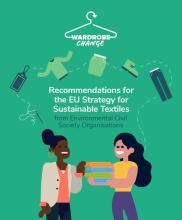
This joint position paper from the Wardrobe Change coalition contains recommendations for the EU Strategy for Sustainable Textiles. It has been signed by 25 civil society organisations. The paper sets out recommendations structured around four overarching principles:
Make sustainable textile products the norm
Drive resource-sufficient textile consumption
Leave the linear business model behind
Hold the EU textile industry responsible for its role in the world.
The Circular Economy and Society Hub of Utrecht University has prepared a white paper analysing the key strengths and weaknesses of the way in which Extended Producer Responsibility (EPR) is organised in the Netherlands. Based on this analysis, it then sets out three pathways for improving EPR with a view to enabling it to contribute to the circular economy goals:
Optimising EPR as an instrument for post-user circularity
Re-designing EPR as an instrument for circular economy transformations
Position paper on the potential use of RFIDs in packaging material in the “Modernisation of the Food Industry through Industry 4.0 and Digitisation initiative”
The GLOPACK (Granting society with LOw environmental impact innovative PACKaging) project aims to come up with food packaging which has no environmental footprint and can extend the shelf life of food products.
This paper explores the applications of Radio frequency identification (RFID), a promising technology that can identify articles much more efficiently than barcodes. One of the project's areas of interest is RFID-enabled wireless food spoilage indicators linked to food date labels.
RFID technology can help reduce waste (consumers can use it to check the quality of the food in their fridge) and increase recycling (it is good for mass identifying items quickly, which is helpful in a recycling facility).
The European Carpet and Rug Association (ECRA) welcomes the European Circular Economy Action Plan 2.0 and believes in its ability to accelerate the transition from a linear to a circular economy.
In its support of the European Commission's strategy, the carpet and rug industry would like to present its ambition for a robust and consistent shift to a circular economy.
This strategic document presents realistic objectives and adequate measures to guide an orderly shift to full circularity and a low carbon industry.
European consumers lack the means to improve the durability of their products. In addition to harming the environment by emitting CO2, extracting non-renewable resources unnecessarily and creating waste, premature obsolescence in all its forms affects citizens’ purchasing power, their right to repair and their freedom to make their products last longer.
This white paper aims to give all stakeholders suggestions and ideas to move towards a world in which repair and responsible consumption are the norm. This will necessarily imply new constraints on manufacturers, that can no longer make products without taking durability and repair into account. It will also require new tools to inform citizens so that they are empowered in their consumption choices.