This report looks at whether, and to what extent, the EU recycling targets can be met through improved recyclability of packaging and increased separate collections of municipal waste.
It examines the role mixed waste sorting (MWS) could play in three EU countries with high recycling performance – Germany, Belgium, and Sweden.
The conclusion is that in addition to separate collection and improved recyclability of plastic packaging, a full roll-out of effective MWS is necessary to meet recycling targets consistently, and to ensure progress towards the EU’s wider carbon emissions reduction goals.
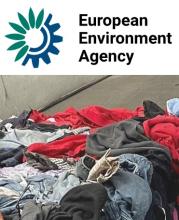
Textiles are on average the fourth-highest source of pressure on the environment and climate change from a European consumption perspective, as shown in previous EEA briefings.
Europe faces major challenges managing used textiles, including textiles waste. As reuse and recycling capacities in Europe are limited, a large share of used textiles collected in the EU is traded and exported to Africa and Asia, and their fate is highly uncertain.
The common public perception of used clothing donations as generous gifts to people in need does not fully match reality.
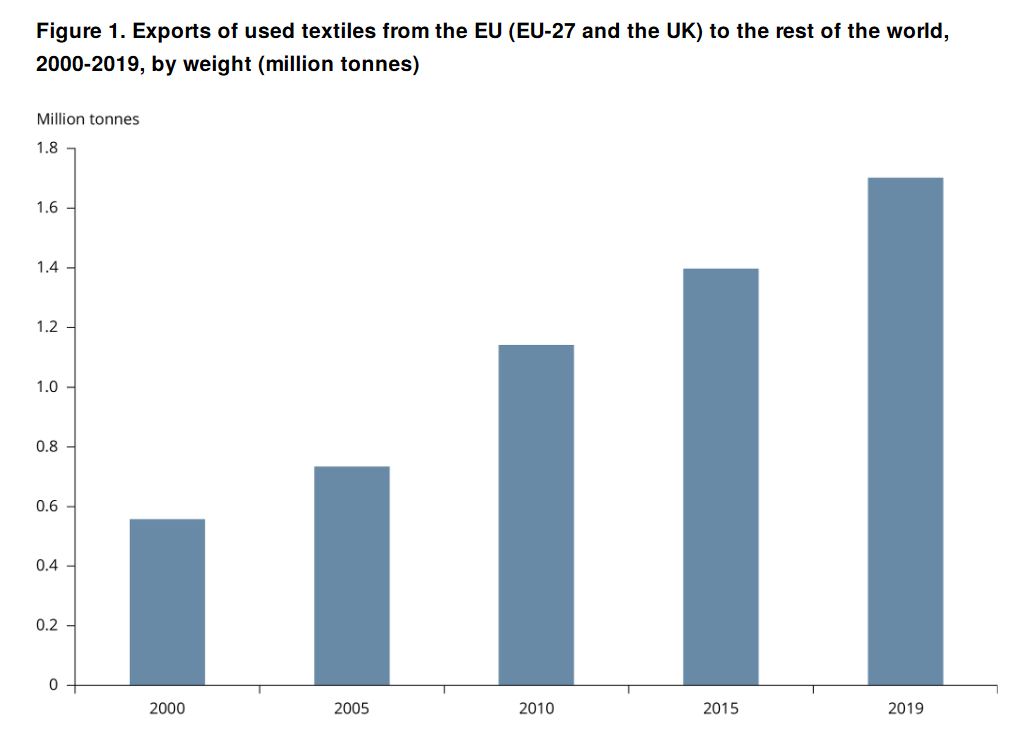
In the course of two decades, there has been a threefold increase in EU used textiles exports
The catalogue, entitled "20 years of ecodesign - Made in Euskadi" and available in both physical and digital formats, is the first in Europe to compile a broad list of product categories from ten industrial sectors, namely the chemical industry, the metal sector, furniture, automotive, food, production and consumption, machinery, transport, electric-electronic, and the construction materials sector. Individual data sheets containing the main characteristics and aspects of each circular product are provided.
The publication illustrates how lifecycle analysis methodologies have been applied to substantially improve the environmental impact of these products and to serve as an example for the European industrial sector.
Although only 24% of the new circular solutions developed or demonstrated in the projects are already operational, the results of all the projects completed as of this date and validated by the companies have been included.
See also the website listing all the Basque Country's circular solutions to date.
The 2022 Circular Cities Declaration Report is a very important milestone. Not only is it the first progress report for the European Circular Cities Declaration, it also features statements from 40 signatory cities. This makes it the broadest ever assessment of circular economy practices across European cities.
The report shows that considerable progress is being made: half of the 40 cities involved in the programme already have circular economy strategies in place or in development.
This is just the start. By the end of 2025, the aim is to have 150 cities signed up to this Declaration. Together, the signatories are embedding circularity into European cities!
Secondary raw material (SRM) markets are crucial for a circular economy. This is because SRMs enable recyclables to re-enter the production value chain, which reduces dependency on primary resources as a result.
This role is acknowledged in the EU circular economy action plan of 2020. However, if policy is to help establish or further develop such markets, we need to better understand the currently-fragmented SRM markets in the EU.
The report Twin Transition in the Wood-Furniture Value Chain - State-of-the-art on Environmental Certifications Practices and Industry 4.0 in the Wood and Furniture Sector provides an overview of the current environmental and digital trends and practices affecting the wood value chain in its entirety. Taking a value chain perspective, the report outlines regulatory trends, new digital and technological developments, and emerging practices that will affect the sector as a whole.
By deploying smart systems and new production processes, European SMEs can optimise their usage of raw materials, improve their waste management and contribute to the development of a circular economy.
Rare earth elements are strategically important for the EU to sustain and accelerate its green and digital transition, particularly due to their use in permanent magnets. Rare earth permanent magnets are critical components in wind turbines and electric vehicles, as well as home appliances and consumer electronics.
However, faced with an expected surge in demand, limited domestic manufacturing capacity, high import dependency and rising geopolitical tensions, the EU’s ability to meet the future demand for rare earth magnets is at risk.
This report examines the barriers hindering the establishment of a viable magnet recycling chain in the EU, whilst estimating the extent to which recycling could offset the coming increase in demand for rare earth magnets.
At the request of the European Commission, the European Environment Agency (EEA) has produced EU country profiles that offer an updated view of circular economy policies being implemented at a national level, with a particular focus on elements that go beyond EU mandatory elements, and best practice with a focus on policy innovation.
While implementing the EU Circular Economy Action Plan (CEAP 2020), Member States are encouraged to advance circularity at a national level by adopting policies and initiatives that go beyond EU regulations, while preserving the Single Market.
These circular economy country profiles are based on information reported by the Eionet network and, particularly, its Group on Circular Economy and Resource Use in the second quarter of 2022.
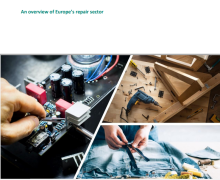
Repair is one of the key circularity strategies. It can lead to extended product use and efficiency, reduced consumption of natural resources and materials and minimised waste production.
The importance of this sector has been acknowledged in several of the European Commission’s strategic documents, such as the European Green Deal and the Circular Economy Action Plan.
The aim of this report is to consolidate and advance the existing knowledge, and provide an evidence-based update on the status of the repair sector in Europe. It focuses on three key product groups:
electrical and electrical equipment (EEE),
clothing and
furniture.
It also provides an overview of the value, size, challenges and opportunities of current repair activities in these sectors.