As part of the Cooperative Partnership Erasmus+ IDEA (Improved Employability through Circular Economy Education for Adults) project, the partners have designed a comprehensive set of educational materials and platforms to assist educators with training unemployed adults (45+).
The ECO-FUTURE project was a 24-month transnational cooperation project on Teaching Circular ECOnomy to the FUTURE Generations.
It produced a series of educational tools in the field of the circular economy. The materials produced provide an upskilling pathway programme with which teachers can help 6-12 year old pupils explore the topic and values of the circular economy and sustainability.
ISO 59004 belongs to the ISO 59000 family of standards which is designed to foster a shift towards a circular economy.
Focusing on Circular economy — Vocabulary, principles and guidance for implementation, this standard advocates for a circular economy model which emphasises the sustainable management and renewal of natural resources.
It aims to help organisations contribute to the United Nations Agenda 2030 for Sustainable Development by facilitating the transition to circular use of resources. It sets out key terms and concepts, a vision for a circular economy, core principles and practical guidance for delivering on sustainability goals.
You can read a sample or purchase the full version on the ISO website.
ISO 59010 covers Circular economy — Guidance on the transition of business models and value networks.
This standard provides guidance for organisations wishing to take their value creation models and networks from linear to circular. It focuses on business-oriented strategies to implement circular economy practices at both organisational and inter-organisational levels. It complements ISO 59004 by offering more detailed guidance on assessing current value creation models, mapping value chains and value networks, and developing strategies for circularity. ISO 59010 is designed to help organisations make this transition effectively.
You can read a sample or purchase the full version on the ISO website.
The FOODY EU project promotes entrepreneurial skills and employment of young people, using circular economy principles to combat unemployment. It provides comprehensive information on the management and environmental impacts of food waste, using the food industry and waste management sector to instill in young people the value of resource conservation.
ISO 59020 covers Circular economy — Measuring and assessing circularity performance.
It provides a structured approach for organisations to measure and assess their circularity performance. It aims to standardise the process by which organisations collect and calculate data, using mandatory and optional circularity indicators.
This standard will:
help organisations align with global sustainability goals
enhance transparency and accountability in environmental reporting
support strategic decision-making for sustainable resource management.
You can read a sample or purchase the full version on the ISO website.
Together with ISO 59004 and ISO 59010, these standards offer a complete toolkit for achieving a circular economy, from principles to measurement.
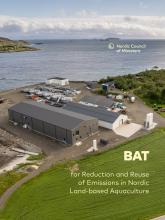
One advantage of land-based aquaculture is that emissions can theoretically be contained and reused. However, the techniques for doing so keep evolving. If the Nordic aquaculture industry is to grow in an environmentally sustainable manner, information is needed on the best available techniques.
The Nordic Council of Ministers therefore requested a report on the best available techniques for reducing and reusing emissions from land-based aquaculture. This report explores the state of play of Nordic aquaculture and takes stock of emerging and established techniques for reducing emissions and managing waste, with a focus on the circular economy. Improving waste management might improve the viability of land-based aquaculture, supporting the sustainable growth of this sector.
Companies in the electronics sector are stepping up their efforts to move to circular business models.
This document describes Circular Transition Indicators (CTI), a metrics framework positioned to be the universal language of circular performance and accountability. CTI enables businesses to assess circularity levels, set improvement targets and monitor progress.
This is a comprehensive guide for businesses aiming to integrate circular business models into their operations with a view to effectively addressing biodiversity loss.
It guides companies through the process of identifying and prioritising their most critical biodiversity impacts.
The Waste Framework Directive mandates that from 2025, EU Member States must establish separate collection systems for used textiles.
This briefing provides an overview of the state of play of textile waste generation, collection systems, treatment capacity and the different classifications for used textiles in Europe. It also identifies factors which must be considered when implementing separate collection systems, with a view to fostering the circularity of textiles without inadvertently increasing exports, incineration or landfilling.
It is underpinned by a report from the European Environment Agency’s European Topic Centre on Circular Economy and Resource Use.