A guide for circularity in the urban built environment

Country
EU
Document type
Recipient profiles
Language for original content

This document is intended to guide cities on how to advance their circular transition in the built environment, from establishing an enabling framework to implementing circular solutions. 

It covers a circular urban built environment, the changing roles of stakeholders in a circular built environment and key recommendations and action points for cities.

A guide for developing a circular city strategy

Country
EU
Document type
Recipient profiles
Language for original content

This document provides an easy step-by-step guide for developing a Circular City Strategy. It looks at relevant good practices in Europe and considers common barriers and key factors for success in this process.

Upload document

A catalogue of circular city actions and solutions

Front page of A catalogue of circular city actions and solutions
Type
Author
European Investment Bank
Publication Date
04/2024
Country
EU
Language for original content
Scope

Cities have a critical role to play in the transition from a linear to a circular economy. They are centres of consumption and production, and they host the systems and policies that enable and govern urban life. 

This guidance document aims to help cities identify actions and solutions that can accelerate their circular transition. The document covers eight key sectors with high circular potential: Built environment, Consumer goods, Food, Manufacturing, Mobility and logistics, Tourism and leisure, Waste and material management and Water and wastewater management. 

The circular approaches that can be adopted in each sector are introduced first, and this is followed by examples of potential circular actions and solutions.

See Circular City Centre - C3.

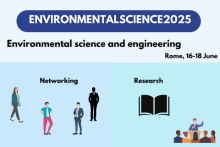
The Global Summit on Environmental Science and Engineering will present the most recent developments in this field, with highly cited researchers, industrial leaders and exhibitors sharing their research. The sessions will cover topics such as waste-to-energy conversion, landfill management and waste management.

PACCT for Sustainability (Product as a service to Accelerate Cooperation & Circular Transformation) is a platform which aims to make service and sustainability the keystone of businesses across Europe and to build a European community focused on Product as a Service.

It is organising a webinar exploring how Efficiency-as-a-Service in the building sector can be a game changer in achieving key environmental targets and objectives.

Country
EU
Recipient profiles

The European Investment Fund is a specialist provider of risk finance for small and medium-sized enterprises across Europe. 

It provides financial resources via intermediaries, such as banks and micro-credit providers, and its targets areas include circular economy infrastructure and the bioeconomy.

Country
EU
Recipient profiles

Initiated by the European Investment Bank, the European Circular Bioeconomy Fund is the first private venture capital impact fund exclusively dedicated to the (circular-) bioeconomy.

It aims to speed up the shift from a fossil-based to a circular bio-based economy and contribute to achieving the European Green Deal goals to make Europe climate neutral by 2050.

Country
EU
Recipient profiles
Documents

The Circular City Funding Guide shares knowledge, best practices and information on circular solutions, and on ways to finance the preparation and implementation of such solutions.

It covers grant and subsidy types of financial support, along with different types and sources of financing such as debt, equity and guarantees.

Subscribe to