Are you working on circular economy challenges in your city or region? Progress is faster when you share experiences with peers working on the same issues. Join one of the new CCRI communities of practice to benefit from focused, in-depth exchanges on a specific topic. Apply now for one of the four communities of practice.
Join this webinar organised by the Sustainable Fashion Academy, a non-profit social purpose organisation which aims to accelerate progress towards science-based sustainability targets and the SDGs. Have a look at the European Environment Agency's new metrics for monitoring environmental performance and circularity uptake in the textiles sector.
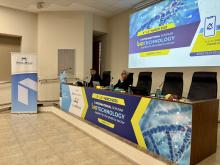
Over a hundred international specialists in biotechnology and sustainability attended this seminar on 5-6 March. They discussed innovations in the field of biotechnology applied to the plastics sector and looked at the challenges ahead and the ways in which it contributes to society and the economy.
In 2016, the European Economic and Social Committee (EESC) came up with the idea of a stakeholder platform for the circular economy. It's still living up to circular principles with a Reuse corner for parents.
This highly theoretical research paper aims to map out ways and means to build a body of knowledge on the process of regeneration and the ways in which regenerative circular economies may function.
Ultimately, it finds that if stakeholders are willing to follow a bio-inspired approach for co-investing resources, time and planning while considering specific system characteristics and the underlying contexts, then small changes in governance, behavioural patterns and technology improvement may contribute substantially to the development of regenerative circular economies.
The Center for Circular Economy in Coffee (C4CEC) is the first precompetitive platform for enhancing the circular economy in the coffee sector.
Coffee production generates substantial biomass at every stage. Instead of becoming waste, this biomass can be turned into valuable products using circular and regenerative agricultural practices. Every part of the coffee plant, from the cherry's skin to the spent grounds, contains unique compounds that are suitable for various industrial applications.
C4CEC aims to make know-how related to circularity in the coffee sector accessible to a diverse group of stakeholders. It will enhance the environmental, social, cultural and economic sustainability of the coffee value circle and offers customised member support for developing ideas.
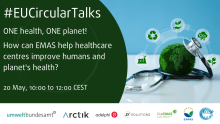
This webinar introduced the One Health concept and highlighted the interconnectedness of human, animal and environmental health.
It also explored the EU's Eco-Management and Audit Scheme (EMAS) and showed how it can help healthcare centres reduce their environmental impact and contribute to the circular economy.