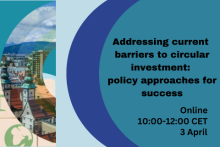
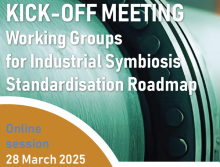
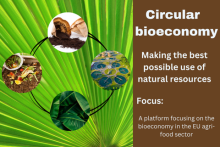
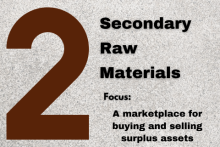
Boxes with the different types of content and the words 'Want to see what we've added to the website recently? No problem: here's a recap!"
News type

The ECESP adds a fair number of items to the website every week: this recap will help you keep up!

The Circular City Centre – C3 is a competence and resource centre led by the European Investment Bank and co-funded by the European Commission as part of the Circular Cities and Regions Initiative. They are now calling for applications for advisory programmes to support cities at various stages of their circular transition. 

30 years of optimum EPR: How to make the best out of it

The Extended Producer Responsibility Alliance (EXPRA) was founded in 2013 to promote effective and efficient EPR systems and sustainable packaging. It has produced a study outlining the core principles and practices of EPR, which are crucial for shaping and supporting effective EPR policies across Europe and worldwide.

Petshka is an R&D company based in France. It has devised a process for turning polyester waste into recycled polyol polyester, thus avoiding a huge amount of waste and emissions and reducing reliance on fossil fuel-based raw materials.

Upload document

Network properties of the global waste trade

Wide shot of Businessman and worker talking on platform above conveyor belts in recycling plant
Author
Filippos K. Zisopoulos, Brian D. Fath, Xin Tong, Martin de Jong
Publication Date
12/2024
Country
Netherlands
Language for original content
Scope

The network properties of the global waste trade were assessed using time series data of material and monetary flows between 2000 and 2022 from Chatham House's experimental database. The study focused on the distribution of monetary and material flows, policy recommendations and future research avenues useful for obtaining a more comprehensive understanding of socio-economic systems such as trade networks.

This work is a solid example of the application of network-based methods as an eco-mimicry approach for assessing the sustainability and fragility of socio-economic systems which can be helpful for researchers and policy makers interested in transitions towards regenerative circular economies.

Containers from a height with different types of metal.
Author
Filippos K. Zisopoulos, Brian D. Fath, Susana Toboso-Chavero, Hao Huang, Daan Schraven, Benjamin Steuer, Alexandros Stefanakis, O.Grant Clark, Serban Scrieciu, Simron Singh, Dominik Noll, Martin de Jong
Publication Date
10/2024
Country
Netherlands
Language for original content
Scope

This study assesses the network properties of the global trade in waste metals and the distribution of material and monetary flows across trading countries using a bio-inspired approach.

Due to homogenization, high network redundancy and low network efficiency, the trade remained robust yet outside the "window of vitality" characterising natural ecosystems. A few, mostly high-income countries dominated the market, consolidating imports of high-value metal waste, mostly from low- and middle-income exporters.

Policies should address circularity and trade inequities, accounting for environmental and social ramifications throughout the lifecycle of products and materials.

AIMPLAS, the Plastics Technology Centre, is hosting the second International Seminar on Biotechnology Applied to the Plastics Sector.

This event will bring together over 20 international experts in biotechnology and sustainability to explore innovative solutions that will enable the plastics sector to move towards a more sustainable future.

Subscribe to