CERC promotes the key objectives of the Circular Economy Action Plan in Romania, encouraging the development of new markets and business models, and contributing to economic growth and job creation.
It does this by:
producing studies on waste management
setting up partnerships with national and international bodies with a view to establishing programmes geared to implementing circular principles
organising events to promote the exchange of knowledge and good practices
communicating with local and central authorities on how the circular economy can benefit Romania's economy
promoting compliance with waste management rules, including the fields of recycling, reuse and alternative fuels
promoting the EU recommendations on green public procurement
PREVENT Waste Alliance is an international think tank, connecting circular economy practitioners worldwide.
It was launched in May 2019 and serves as a platform for exchange and international cooperation. Organisations from the private sector, academia, civil society and public institutions work together for a circular economy.
Its goal is tominimise waste, eliminate pollutants and maximise the reuse of resources in the economy. It promotes waste prevention, collection and recycling as well as increased uptake of secondary resources.
The members take part in working groups on plastics, e-waste and batteries, and organic waste. The Alliance has also produced a toolbox on Extended Producer Responsibility for packaging.
The Circular Plastics Alliance aims to boost the EU market for recycled plastics.
It covers the full plastics value chains and includes over 330 organisations representing industry, academia and public authorities. It is open to all public and private actors from European plastics value chains that are ready to contribute to delivering on the alliance's declaration, specifically that by 2025 at least 10 million tonnes of recycled plastics should find their way into products and packaging in Europe each year.
Companies and business associations are encouraged to submit voluntary pledges on recycled polymer(s) to be produced or used by their organisation by 2025.
The Circular Economy for Flexible Packaging (CEFLEX) initiative is a collaboration of over 180 European companies, associations and organisations representing the entire value chain of flexible packaging. It wants all flexible packaging to be designed for easy collection, sorting and recycling, with valuable new markets and applications created for the recycled materials.
CEFLEX stakeholders represent the full value chain including: raw material producers (plastics, paper and aluminium foil), ink, coating and adhesive suppliers, film producers and flexible packaging converters, brand owners, waste management companies, recyclers, extended producer responsibility organisations and technology suppliers.
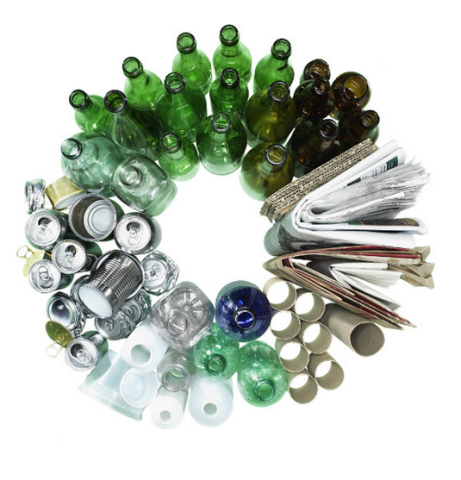
Recycling Europe (formerly EuRIC) represents the recycling industry at European level and is the leading voice for a competitive European recycling industry, enabling the circular economy and preserving resources for future generations. It:
advocates for conditions that enable recycling and waste management sectors to be competitive, grow and re-invest;
connects the European recycling industries and other circular economy stakeholders;
acts as a trusted partner between the European recycling value chain and policy makers;
Advances the socio-economic, climate and environmental benefits of recycling;
provides specific and cross-sectoral expertise on a broad range of materials, including:
CRE is an association representing the chemical recycling industry. It aims to promote and support the implementation of innovative chemical recycling technologies, boosting the circular economy for plastics.
Priorities:
Provide sustainable solutions to overcome the current challenges of recycling processes.
Protect nature by transforming plastic waste into a valuable resources.
Endlessly recycle plastic waste by transforming it back into its components or other products.
Save CO2 emissions and reduce the carbon footprint of our industry.
Reduce landfilling by offering sustainable end-of-life options for all plastic waste.
Chemical recycling technologies play a key role in supporting the transition towards a more sustainable and circular economy in Europe.
Citeo is a non-profit active in the field of Extended Producer Responsibility relating to paper and packaging. It works to reduce its environmental impact.
Under the Environmental code, producers and distributers are responsible for - and must pay the costs of – dealing with the waste generated by the packaging used by their products. Companies can transfer their responsibility in this area in exchange for paying to join Citeo. The funds thus collected are used to finance the collection, sorting, recycling and reuse of packaging.
Members also have access to support from Citeo's experts, enabling them to apply eco-design principles to paper and packaging, inform their customers about the products' environmental characteristics and plan for the impact of French and European regulations.
The Italian Phosphorus Platform was set up to mirror the European Sustainable Phosphorus Platform. It aims to make Italy self-sufficient in terms of phosphorus and to ensure coordination with European policies.
The Platform is made up of stakeholders active in the phosphorus chain, with an emphasis on conservation and recovery. It includes research centres, public and private institutions, businesses and environmental associations.
Phosphorus is a critical raw material for Europe: hardly any products containing it are recycled and the EU is almost entirely dependent on imports from third countries. The Platform aims to close this loop.
The Platform has four working groups: Management and coordination, Technologies and good practices, Legislation, and Market.
Žiedine Ekonomika is a Lithuanian association promoting the circular economy. This non-profit organisation links up local, national and European public authorities with companies to help develop circular business models in Lithuania.
WRAP is a global environmental action NGO transforming our broken product and food systems to create circular living for the benefit of climate, nature and people. It aims to embed circular living in every boardroom and every home.
For over twenty years, WRAP has delivered programmes to benefit the environment, from reducing CO2 emissions and waste to restoring nature and enhancing people’s lives. It began in the UK in 2000 but is now global in scale.
Its goal is to drive the transition to a circular economy by keeping products and materials in use for longer, supporting innovation, adopting new business models and increasing the amount of material that is reused or recycled, as well as minimising waste and reducing the reliance on virgin materials.