The Circular Economy Resource Information System (CE-RISE) is an EU-funded project aiming to optimise raw material reuse and recovery in electronic products.
CE-RISE seeks to create an information system and integrate digital product passports. It will provide stakeholders with a better understanding of the green credentials of electronic products.
The FutuRaM project has delivered the most comprehensive assessment of critical raw materials embedded in Europe’s waste streams to date, analysing 42 critical elements contained in 7 waste streams.
It has found that improved recovery systems could enable Europe to recover between 4.1 and 5.7 million tonnes of CRMs annually by 2050.
The Circular Procurement Toolboxis built upon existing tools and methodologies designed to assist procurers in their efforts. It comprises a collection of original tools and methods that have been compiled throughout the project's duration, and continues to be refined based on practical experiences gained through their implementation.
The Navigation Tool is designed to explain the different steps in the plastic recycling process, from collection through sorting to reuse.
It gives information on the TRANSFORM-CE project’s findings, shares links to project reports and publications, gives the contact details of the project’s partners for questions or collaboration, explains IEM and AM, and suggests uses for recycled plastics.
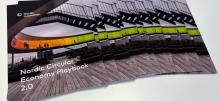
This updated playbook by Nordic Innovation, Accenture and Sitra is a guide to circular business models. It is tailored to companies in the Nordic manufacturing industries and describes the key enablers to fully transform and become a circular business.
65% of electrical and electronic appliances put on the market must be collected after use when it turns into Waste Electrical and Electronic Equipment (WEEE). One key step in achieving that 65% is to map e-waste streams, reliably and at every stage. The BeWeee tool is designed to help companies in Belgium do so.
The Circular Buildings Toolkit will help designers and planners create a better future in the built environment sector. Arup and the Ellen MacArthur Foundation launched the toolkit in a bid to bring a circular economy for buildings into the mainstream, and future-proof assets in the face of a rapidly changing policy landscape.
Reducing the negative environmental impact caused by building processes and materials is an important element of circular construction. Sustainable construction applies to both public spaces (as it pertains to civil and hydraulic engineering) and the built environment (the construction of residential and non-residential buildings).
Circular design is gaining momentum as regards creating both a sustainable built environment and public spaces. Circular design makes buildings more adaptable and facilitates the high-value reuse of a structure’s materials once they have reached the end of their life. This toolbox article summarises the circular design of buildings in eight core principles.
Flanders DC and Circular Flanders have developed a tool to guide fashion entrepreneurs through the basics of a more sustainable way of working. With this online platform they want to encourage the industry to steer clear of a linear system (take-make-waste) and to embrace a more circular approach instead (with a focus on durability and avoiding waste).